
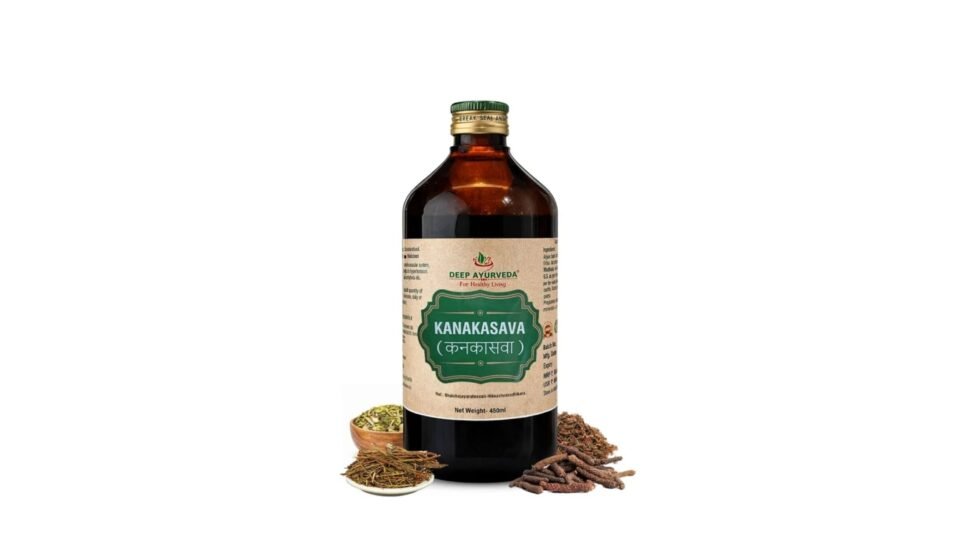
Kanakasava: Complete Guide to Uses, Benefits, Dosage, Side Effects, and Safety

ough, excess mucus, chest congestion, or recurring breathing discomfort can have different causes, and Ayurveda does not necessarily approach every respiratory complaint in the same way. Kanakasava is a classical Ayurvedic fermented formulation traditionally associated with respiratory conditions such as Kasa (cough) and Swasa (breathing disorders). It is described under Sandhana Kalpana and is referenced in Bhaishajya Ratnavali in the context of Hikkaswasa.
What makes Kanakasava particularly interesting is that it is not simply a herbal cough syrup. Its formulation combines several Ayurvedic herbs, including Vasa, Yashtimadhu, Pippali, Kantakari, Bharangi and Shunthi, along with Dhataki as a fermentation-supporting ingredient and Draksha as the decoction component.
However, because Kanakasava contains Datura, it should not be treated as an ordinary home remedy or taken in increased quantities on one’s own. Appropriate formulation, dosage and professional guidance are important.
In this guide, I will explain Kanakasava from both a classical Ayurvedic perspective and a practical safety perspective, including its ingredients, traditional uses, dosage, side effects, precautions and how an Ayurvedic physician may decide whether it is appropriate for a particular person.
What Is Kanakasava?
Kanakasava, also known as Kanakasavam, is a classical polyherbal Ayurvedic preparation belonging to the category of Asava and more broadly Sandhana Kalpana—Ayurvedic fermented preparations.
According to a published review of the formulation, Kanakasava is described in Bhaishajya Ratnavali under Hikkaswasadhikara and is traditionally indicated for conditions including Kasa, Swasa, Rajayakshma, Kshataksheena, Jirna Jwara, Raktapitta and Urakshata.
From an Ayurvedic practitioner’s perspective, an important point is that these classical terms should not automatically be equated one-to-one with modern diagnoses. For example, Swasa is not simply synonymous with every modern case of asthma. The patient’s symptoms, Dosha involvement, strength, digestion and overall clinical presentation all matter when selecting a formulation.
Is Kanakasava a fermented medicine?
Yes.
Kanakasava is prepared through Sandhana Kalpana, a traditional Ayurvedic fermentation process. During this process, fermentation produces a naturally generated alcohol-containing medium that helps extract and preserve constituents from the formulation.
This is one reason Kanakasava should be understood differently from an ordinary water-based herbal decoction.
Kanakasava Ingredients
The classical composition described in the reviewed literature contains several herbs with complementary traditional roles.
| Ingredient | Botanical name | Traditional Ayurvedic relevance |
|---|---|---|
| Kanaka / Datura | Datura metel | Traditionally associated with respiratory and Vata-Kapha presentations |
| Vasa | Justicia adhatoda | Traditionally used in Kasa and Swasa |
| Yashtimadhu | Glycyrrhiza glabra | Traditionally valued for soothing and respiratory support |
| Pippali | Piper longum | Deepana and traditionally used in Kasa and Swasa |
| Kantakari | Solanum virginianum | Traditionally associated with Kapha and respiratory complaints |
| Nagakesara | Mesua ferrea | Traditionally used in Raktapitta-related contexts |
| Shunthi | Zingiber officinale | Traditionally used for Kapha-related conditions and digestion |
| Bharangi | Rotheca serrata | Traditionally associated with Kasa and Swasa |
| Talisapatra | Abies spectabilis | Traditionally used in respiratory presentations |
| Dhataki | Woodfordia fruticosa | Sandhana Dravya used in fermentation |
| Draksha | Vitis vinifera | Kwatha Dravya and traditionally regarded as supportive in respiratory conditions |
The exact composition and pharmaceutical specifications should always be checked against the authoritative formulation and the manufacturer’s approved product information rather than assuming that every commercially sold product has identical specifications.
Why Are So Many Herbs Combined in Kanakasava?
This is where the Ayurvedic formulation becomes more interesting.
Kanakasava is not designed around one isolated herb. Different ingredients contribute different traditional actions.
For example, Vasa and Kantakari are traditionally associated with respiratory complaints, while Pippali and Shunthi are valued for their Deepana and Kapha-oriented actions. Yashtimadhu adds a traditionally soothing and supportive component, while Bharangi is classically associated with respiratory conditions.
From an Ayurvedic perspective, the objective is therefore not simply to stop a cough. The formulation is traditionally understood in relation to the Dosha, Agni and Pranavaha Srotas involved in the presentation.
Kanakasava Benefits and Traditional Uses
Kanakasava is traditionally associated primarily with respiratory conditions. However, I would advise readers not to interpret every listed classical indication as a modern disease-treatment claim.
1. Kanakasava for Kasa (Cough)
Kasa is the Ayurvedic term broadly associated with cough.
From an Ayurvedic perspective, cough may present differently depending on the Dosha involved. A cough associated with Kapha may involve mucus, heaviness and congestion, while a Vata-dominant presentation may be drier and more irritating.
Therefore, saying that Kanakasava is for every type of cough would be an oversimplification.
The formulation is traditionally described for Kasa, but an Ayurvedic physician may consider the nature of the cough before recommending it.
2. Kanakasava for Swasa (Breathing Disorders)
Swasa is another major classical indication of Kanakasava.
The formulation contains several herbs traditionally associated with the respiratory system, including Vasa, Pippali, Kantakari and Bharangi.
However, Swasa should not automatically be interpreted as modern asthma.
A person experiencing severe or sudden breathing difficulty should receive appropriate medical assessment rather than relying solely on an Ayurvedic medicine.
3. Traditional Support for Kapha-Related Respiratory Complaints
Several ingredients in Kanakasava have traditionally been described as having Kapha-oriented actions.
Pippali, Shunthi, Kantakari and Bharangi are particularly relevant from this Ayurvedic perspective. Their traditional properties are discussed in the published review of Kanakasava.
This is one reason Ayurvedic practitioners may consider the formulation differently depending on whether congestion, mucus and Kapha predominance are present.
4. Traditional Use in Hikka
An interesting aspect that is often missing from commercial articles is Hikka, or hiccup-related presentations.
Kanakasava is discussed in the context of Hikkaswasa Rogadhikara in Bhaishajya Ratnavali.
This classical connection is worth mentioning because it demonstrates that Kanakasava’s traditional therapeutic context is broader than the modern marketing phrase cough syrup.
5. Classical Indications Beyond Cough and Breathing Complaints
Classical/review literature also lists Rajayakshma, Kshataksheena, Jirna Jwara, Raktapitta and Urakshata among the indications of Kanakasava.
These terms come from the Ayurvedic disease framework and should not be directly translated into modern diagnoses without clinical context.
This distinction is particularly important when writing health information because an ancient diagnostic term and a modern medical diagnosis may overlap only partially.
How Does Kanakasava Work According to Ayurveda?
An Ayurvedic explanation begins with the Dosha and Srotas, rather than focusing only on the symptom.
Respiratory complaints may involve disturbance of Vata and Kapha, particularly within the Pranavaha Srotas. The formulation contains several ingredients traditionally described as useful for Kasa and Swasa and for managing Kapha-related obstruction.
For example:
- Pippali – traditionally considered Deepana and useful in Kasa and Swasa.
- Shunthi – traditionally associated with Kapha management and digestive support.
- Kantakari – traditionally associated with Kasa and Swasa.
- Bharangi – traditionally used in respiratory presentations.
- Vasa – traditionally valued for Kasa and Swasa.
- Yashtimadhu – traditionally regarded as soothing and supportive for the respiratory tract.
Therefore, Kanakasava should be understood as a multi-herbal formulation with a particular Ayurvedic therapeutic rationale, rather than as a single-ingredient medicine.
How Is Kanakasava Prepared?
Kanakasava belongs to the Ayurvedic fermented preparation category known as Sandhana Kalpana.
The classical preparation described in the literature involves preparing a Draksha decoction, adding sugar and honey after cooling, and then adding the powdered ingredients along with Dhataki. The mixture is allowed to ferment under controlled conditions before the finished preparation is collected.
What is the role of Dhataki?
Dhataki (Woodfordia fruticosa) is used as the Sandhana Dravya.
In other words, it is not simply included because it has a separate benefit. Its role is connected with the fermentation process of the preparation. The reviewed literature discusses its contribution to fermentation and the formation of alcohol during the process.
This is one of the reasons Kanakasava has a different pharmaceutical character from a simple herbal decoction.
Does Kanakasava Contain Alcohol?
Yes, Asava preparations undergo fermentation and contain naturally generated alcohol.
The alcohol is produced during the fermentation process rather than being equivalent to simply adding a conventional alcoholic beverage to the medicine. The classical preparation process described for Kanakasava involves fermentation and maturation before the final liquid is obtained.
For people who need to avoid alcohol for medical, personal or religious reasons, the product’s label and manufacturer’s specifications should be checked, and a healthcare professional can help determine whether it is appropriate.
Kanakasava Dosage
Dosage is one area where online Kanakasava information can become confusing because different references and commercial products may provide different recommendations.
A published review reports 12–24 mL as an AFI dose and also describes a 10–20 mL dose with an equal quantity of water from Bhaishajya Ratnavali.
Meanwhile, a CCRAS educational resource for bronchial asthma lists:
Kanakasava 5–10 mL with an equal quantity of lukewarm water after food, under qualified physician supervision.
So, which Kanakasava dosage is correct?
There is no reason to assume that one number is universally appropriate for every person.
Dosage can depend on:
- age
- strength
- digestive capacity
- clinical presentation
- associated medicines
- formulation specifications
- physician’s assessment
Do not increase the dose simply because symptoms are not improving.
For children, elderly individuals, pregnancy, breastfeeding, chronic illness or people taking several medicines, professional advice is especially important.
When Should Kanakasava Be Taken?
The appropriate timing depends on the prescribed regimen and product instructions.
The CCRAS educational material specifically describes Kanakasava with an equal quantity of lukewarm water after food in the context of bronchial asthma.
If you are using a specific commercial product, follow the manufacturer’s label and qualified practitioner’s instructions rather than combining dosage instructions from different websites.
Kanakasava Side Effects
Kanakasava should not be assumed to be completely risk-free simply because it is an Ayurvedic medicine.
Potential problems can arise from:
- inappropriate dosage
- unsuitable patient selection
- poor-quality or improperly prepared products
- individual sensitivity
- interactions with other medicines
- inappropriate use of Datura-containing formulations
The most important safety consideration is the presence of Datura.
Why Does Kanakasava Contain Datura?
Datura is a classical ingredient in Kanakasava, and its presence is one reason this formulation deserves more careful discussion than a generic herbal syrup.
The published review identifies Datura metel as one of the principal ingredients of the classical formulation.
Datura contains potent pharmacologically active compounds, which means that dose, processing, formulation and quality control matter.
Ayurvedic literature includes specific pharmaceutical approaches for medicinal substances that require careful handling, and contemporary reviews also emphasize the safety considerations surrounding vegetable-origin drugs used in Ayurveda.
My practical advice as an Ayurvedic practitioner
I would never recommend using raw Datura at home as a substitute for a properly manufactured classical formulation.
Similarly, Kanakasava should not be taken in larger amounts simply because someone believes that more will work faster.
Who Should Be Careful With Kanakasava?
Medical guidance is particularly important for:
- children
- pregnant women
- breastfeeding women
- older adults
- people with chronic medical conditions
- people taking multiple prescription medicines
- people who need to avoid alcohol-containing preparations
- people with unexplained or severe breathing symptoms
The CCRAS respiratory guidance also explicitly states that Kanakasava and the listed Ayurvedic medicines should be taken under the supervision of a qualified physician.
Kanakasava and Asthma: An Important Distinction
Kanakasava is traditionally associated with Swasa, and it appears in CCRAS educational material concerning bronchial asthma.
But this does not mean that a person with diagnosed asthma should stop prescribed inhalers or other medical treatment and replace them with Kanakasava.
Asthma can become life-threatening when breathing suddenly deteriorates.
An Ayurvedic approach and modern respiratory medicine can be considered complementary in appropriate circumstances, but prescribed emergency treatment should not be discontinued without qualified medical advice.
Kanakasava vs Other Ayurvedic Respiratory Formulations
Ayurveda has many formulations traditionally used in respiratory conditions, and they are not interchangeable.
For example, Maharasnadi Kwath belongs to a different formulation category and has a different therapeutic context. If you want to understand how Ayurvedic formulation selection can vary according to the condition and Dosha pattern, our detailed guide on Maharasnadi Kwath can provide useful context.
Similarly, formulations such as Dashmularishta and Ashwagandharishtam have their own traditional indications and should not be selected merely because they belong to the same broad Ayurvedic medicine category.
The key principle is:
The best Ayurvedic formulation is not necessarily the one with the longest list of benefits; it is the one that appropriately matches the patient’s clinical presentation.
Kanakasava and Modern Medicines
If you are already taking medicines for:
- asthma
- allergies
- cough
- respiratory infection
- blood pressure
- heart conditions
- sleep or anxiety
- other chronic conditions
inform your doctor or qualified Ayurvedic practitioner before starting Kanakasava.
This is especially important because Kanakasava is a fermented preparation and contains pharmacologically active herbal ingredients.
Do not stop prescribed medicines on your own.
What Does Modern Research Say About Kanakasava?
Modern research around Kanakasava includes formulation reviews and experimental work, but the evidence should be interpreted carefully.
A 2022 review examined the formulation’s classical composition, preparation, individual ingredients and their reported pharmacological properties.
However, evidence about individual herbs or laboratory/experimental effects should not automatically be presented as proof that Kanakasava cures a particular human disease.
For health content, I recommend separating evidence into three levels:
1. Classical Ayurvedic evidence
What traditional Ayurvedic texts describe.
2. Ingredient-level research
What laboratory, pharmacological or experimental research suggests about individual ingredients.
3. Human clinical evidence
What properly conducted human studies actually demonstrate.
This distinction is important because traditionally used for and clinically proven to cure are not the same statement.
How to Choose a Quality Kanakasava
If you are purchasing Kanakasava in India, look for:
- a reputable manufacturer
- proper packaging
- batch number
- manufacturing and expiry information
- appropriate regulatory/manufacturing details
- clear ingredient information
- authentic formulation specifications
- proper storage instructions
Avoid buying loose, unidentified or poorly labelled preparations.
Because Kanakasava contains a potent ingredient such as Datura, quality and formulation authenticity are especially important.
When Should You See a Doctor Instead of Self-Treating?
Do not rely on Kanakasava or any home remedy alone if you experience:
- severe or sudden breathlessness
- chest pain
- blue or grey lips
- fainting or confusion
- significant blood in sputum
- rapidly worsening breathing
- persistent unexplained cough
- high fever associated with breathing difficulty
These symptoms may require prompt medical evaluation.
Final Ayurvedic Perspective on Kanakasava
Kanakasava is much more than an Ayurvedic cough syrup. It is a classical fermented polyherbal formulation with a specific Ayurvedic rationale and traditional association with Kasa, Swasa and other classical indications.
Its formulation is particularly interesting because ingredients such as Vasa, Pippali, Kantakari, Bharangi and Yashtimadhu work within a broader Ayurvedic formulation framework rather than functioning as isolated remedies. At the same time, the presence of Datura means that Kanakasava should be approached with respect for dosage, preparation quality and professional supervision.
Frequently Asked Questions About Kanakasava
1. What is Kanakasava used for?
Kanakasava is a classical Ayurvedic fermented formulation traditionally associated mainly with Kasa (cough) and Swasa (breathing disorders). Classical literature also describes additional indications.
2. Is Kanakasava good for cough?
It is traditionally used for Kasa, but not every cough has the same cause. The nature of the cough and the individual’s Ayurvedic presentation should be considered before use.
3. Is Kanakasava used for asthma?
Kanakasava is traditionally associated with Swasa, and CCRAS educational material lists it among Ayurvedic medicines used in the context of bronchial asthma. It should not, however, be considered a replacement for prescribed asthma treatment.
4. What are the main ingredients of Kanakasava?
Important ingredients include Datura, Vasa, Yashtimadhu, Pippali, Kantakari, Nagakesara, Shunthi, Bharangi, Talisapatra, Dhataki and Draksha.
5. What is the dosage of Kanakasava?
Published references describe different dosage ranges. One review reports 12–24 mL as an AFI dose, while CCRAS educational guidance lists 5–10 mL with an equal quantity of lukewarm water after food in a bronchial-asthma context. Dosage should therefore be individualized rather than self-adjusted.
6. Does Kanakasava contain alcohol?
Yes. As a fermented Asava preparation, Kanakasava contains naturally generated alcohol produced during fermentation.
7. Why is Datura used in Kanakasava?
Datura is a classical ingredient of the formulation and is traditionally associated with respiratory actions. Because it contains potent active compounds, the formulation should be used in its properly manufactured medicinal form and at the appropriate dose.
8. Can children take Kanakasava?
Children should not be given an adult Kanakasava dose without professional guidance. A qualified physician should determine whether the formulation is appropriate and what dose, if any, is suitable.
9. Can Kanakasava be taken with modern medicines?
It may be possible in some circumstances, but this depends on the medicines and the patient’s health. Inform your healthcare professionals before combining treatments.
10. How long can Kanakasava be taken?
There is no single duration that is appropriate for everyone. The duration should depend on the clinical condition, response and professional assessment.
11. Is Kanakasava the same as a normal cough syrup?
No. Kanakasava is a classical Ayurvedic fermented formulation prepared through Sandhana Kalpana. Its ingredients, preparation method and traditional therapeutic framework are different from an ordinary cough syrup.