
Lodhrasava: Complete Guide to Uses, Benefits, Dosage, Side Effects, and Safety

Lodhrasava is a classical Ayurvedic fermented herbal formulation traditionally used in Ayurveda for conditions such as Pandu (a condition described with pallor and weakness), Arsha (haemorrhoidal disorders), Grahani Dosha, Sthoulya (excess body weight), Aruchi (loss of appetite), Krimi, and certain urinary, skin, and reproductive health concerns. It is particularly known for the traditional role of Lodhra (Symplocos racemosa) within a broader multi-herbal formulation. Classical references associate Lodhrasava with Ashtanga Hridaya, Chikitsa Sthana 12/24–28.
Unlike a simple herbal syrup, Lodhrasava belongs to the Asava category of Ayurvedic preparations. Its preparation involves herbal decoction and fermentation, traditionally using honey or another prescribed fermentable medium. During fermentation, naturally generated alcohol develops in the preparation, which is one of the characteristics of Asava-Arishta formulations.
From an Ayurvedic perspective, however, Lodhrasava should not be viewed as a universal remedy for every symptom mentioned in an online benefits list. The formulation is selected according to the person’s Agni, Dosha involvement, strength, age, presenting symptoms, associated conditions, and overall clinical picture. This distinction is especially important when someone is considering Lodhrasava for heavy menstrual bleeding, persistent digestive symptoms, anaemia, or urinary complaints.
What Is Lodhrasava?
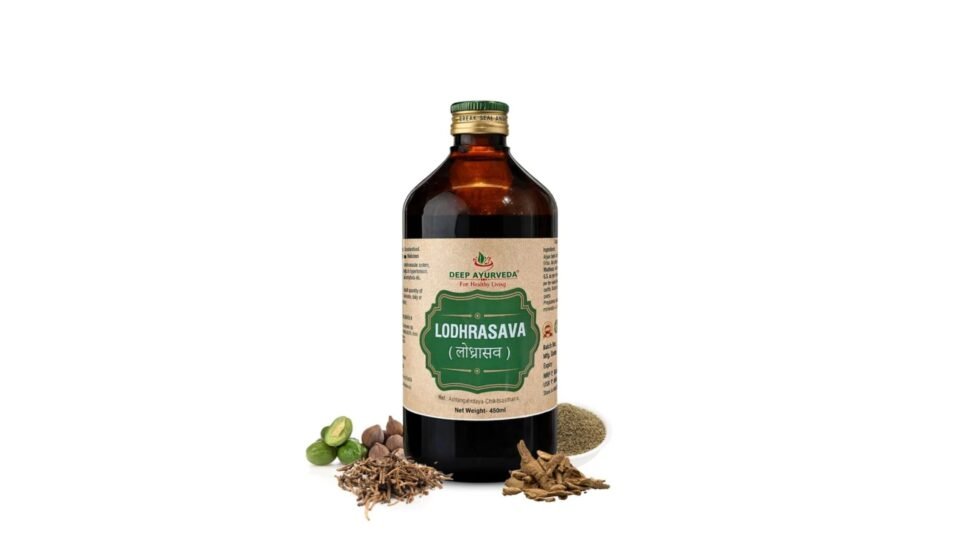
Lodhrasava, also spelled Lodhrasavam or Lodhrasav, is a liquid Ayurvedic formulation prepared through the traditional Asava method. Lodhra is one of its principal herbs, but the formulation contains numerous other herbs selected for their complementary Ayurvedic properties.
The name itself can sometimes create confusion. Lodhra and Lodhrasava are not the same thing. Lodhra refers to the individual medicinal plant Symplocos racemosa, whereas Lodhrasava is a compound fermented preparation containing Lodhra along with other herbal ingredients.
This difference matters because the therapeutic profile of a multi-herbal formulation cannot be understood simply by looking at its most prominent ingredient.
Lodhra: The Principal Herb
Lodhra (Symplocos racemosa) is traditionally valued in Ayurveda for its Kashaya Rasa (astringent taste) and its role in formulations concerned with Rakta and Stri Roga (women’s health). Classical Ayurvedic descriptions also associate Lodhra with functions such as supporting tissue stability and helping maintain normal physiological balance in conditions where excessive discharge or bleeding is considered relevant.
Lodhrasava combines Lodhra with several other herbs, creating a formulation whose traditional indications are considerably broader than the use of Lodhra alone.
Is Lodhrasava Mainly a Medicine for Women?
This is one of the most common misconceptions surrounding Lodhrasava.
Lodhrasava is certainly associated with women’s reproductive and menstrual health in contemporary Ayurvedic practice, particularly in discussions around excessive menstrual bleeding and certain forms of Pradara. However, its classical indications are not restricted to gynecological conditions.
The classical verse describes applications including Meha, Arsha, Shvitra, Kushtha, Aruchi, Krimi, Pandu, Grahani Dosha and Sthoulya.
Therefore, calling Lodhrasava simply a female tonic does not fully represent the classical formulation.
A more accurate way to understand it is as a multi-herbal Ayurvedic Asava with astringent, digestive and systemic therapeutic considerations, whose use may be tailored to different clinical presentations.
Lodhrasava and Its Classical Ayurvedic Perspective
Ayurvedic formulations are traditionally understood according to their Rasa, Guna, Virya, Vipaka, Dosha action and indication-specific application, rather than by assigning a single modern disease label to them.
This is particularly relevant for Lodhrasava.
For example, classical terms such as Pandu, Prameha, Grahani and Arsha have their own Ayurvedic clinical frameworks. They should not automatically be treated as exact equivalents of modern diagnoses such as anaemia, diabetes, irritable bowel syndrome, or every form of haemorrhoidal disease.
As an Ayurvedic practitioner, I consider this distinction important because two people may present with a similar symptom but require very different approaches depending on the underlying cause and their overall Ayurvedic assessment.
What Makes Lodhrasava Different From a Single-Herb Preparation?
There are three important points to remember:
- It is a compound formulation: Lodhra works within a larger combination of herbs.
- It is an Asava: Fermentation is an integral part of its traditional preparation.
- Its use is indication-specific: The same formulation may be considered differently depending on the person’s symptoms, digestive capacity, strength, and associated imbalance.
This is why simply asking, What does Lodhrasava cure? is less useful than asking, For which Ayurvedic presentation is Lodhrasava traditionally appropriate?
That small change in perspective makes the discussion much more clinically meaningful.
Classical Reference of Lodhrasava
Lodhrasava is traditionally referenced in Ashtanga Hridaya, Chikitsa Sthana 12/24–28. The classical formulation describes a combination of herbs followed by the preparation and fermentation process, and the subsequent verse lists its traditional indications.
The commonly cited classical indications include:
- Meha
- Arsha
- Shvitra
- Kushtha
- Aruchi
- Krimi
- Pandu
- Grahani Dosha
- Sthoulya
These terms belong to the Ayurvedic diagnostic framework and should be interpreted within that framework rather than converted directly into modern medical diagnoses.
This classical breadth is an important point that is often lost when Lodhrasava is presented only as a preparation for menstrual concerns.
Why Is Lodhrasava Considered a Fermented Preparation?
The word Asava is important here.
In the traditional preparation, herbal ingredients are processed into a liquid medium and allowed to undergo fermentation. Honey and other prescribed ingredients provide the fermentable medium, while the resulting preparation develops naturally generated alcohol. Older Ayurvedic references commonly describe this self-generated alcohol as part of the preparation rather than as separately added drinking alcohol.
This fermentation is not merely a modern manufacturing detail. It is part of the traditional pharmaceutical method used for Asava preparations.
For this reason, people who are pregnant, breastfeeding, taking multiple medicines, or who have specific medical concerns should not assume that an Ayurvedic liquid preparation is automatically suitable simply because it is herbal.
Lodhrasava Ingredients: Understanding the Herbal Formula
One of the easiest ways to misunderstand Lodhrasava is to look only at its name and assume that it is simply a liquid preparation of Lodhra. In reality, Lodhrasava is a multi-herbal Ayurvedic formulation, and its traditional properties are understood from the combined action of its ingredients.
The exact composition should always be checked against the specific product label and classical reference followed by the manufacturer, because commercial preparations can differ in presentation and manufacturing specifications.
Among the herbs commonly described in classical and Ayurvedic literature associated with Lodhrasava, Lodhra remains particularly important, while other herbs contribute digestive, metabolic, astringent and supportive properties.
Key Ingredients Traditionally Associated With Lodhrasava
| Ingredient | Botanical identity | Ayurvedic significance in the formulation |
|---|---|---|
| Lodhra | Symplocos racemosa | Traditionally valued for Kashaya Rasa and its association with Rakta and women’s health |
| Musta | Cyperus rotundus | Traditionally used to support Agni and digestive balance |
| Vidanga | Embelia ribes | Traditionally associated with Krimighna action |
| Kutaja | Holarrhena spp. | Traditionally important in Grahani and intestinal disorders |
| Chitraka | Plumbago zeylanica | Known in Ayurveda for Deepana and Pachana properties |
| Pippali | Piper longum | Traditionally used to support digestion and bioavailability of herbal preparations |
| Triphala components | Haritaki, Bibhitaki, Amalaki | Traditionally used for digestive and Rasayana-oriented support |
| Nagakeshara | Mesua ferrea | Traditionally valued for Kashaya-oriented and Rakta-related applications |
| Pushkaramoola | Inula racemosa | Included in classical herbal combinations for its broader therapeutic contribution |
The ingredient list is considerably more meaningful when each herb is understood in relation to the overall formulation, rather than assuming that every herb independently produces every claimed benefit.
1. Lodhra (Symplocos racemosa)
Lodhra is the ingredient that gives Lodhrasava its identity.
In Ayurveda, Lodhra is traditionally described as predominantly Kashaya (astringent) in nature. This quality explains why Lodhra-containing formulations are frequently discussed in relation to excessive discharge, bleeding-oriented conditions and women’s reproductive health.
However, it would be incorrect to conclude that every case of abnormal bleeding or vaginal discharge should automatically be treated with Lodhra or Lodhrasava.
The cause of the symptom still needs to be understood.
From a practitioner’s perspective, Lodhra’s traditional role is better understood as part of a formulation-based therapeutic approach rather than as a standalone bleeding-control herb.
2. Musta (Cyperus rotundus)
Musta is a familiar herb in Ayurvedic digestive formulations.
It is traditionally associated with supporting Agni, digestion and the regulation of disturbed digestive function. Its inclusion becomes particularly interesting when looking at Lodhrasava’s broader classical indications, which are not limited to reproductive health.
This also illustrates an important Ayurvedic principle: a formulation may contain herbs that address different aspects of the same clinical picture.
For instance, when digestive weakness accompanies another complaint, simply focusing on the most visible symptom may not provide the complete Ayurvedic picture.
3. Vidanga (Embelia ribes)
Vidanga is traditionally recognized for its Krimighna application and is frequently used in Ayurvedic formulations concerned with intestinal imbalance.
Its presence helps explain why Lodhrasava appears in classical discussions that extend beyond women’s health.
It is also a good reminder that the formulation should be interpreted as a whole, rather than attributing all of its traditional actions to Lodhra alone.
4. Kutaja (Holarrhena spp.)
Kutaja has an important place in Ayurveda, particularly in formulations used traditionally for Grahani-related and intestinal disorders.
The inclusion of Kutaja alongside other digestive herbs gives Lodhrasava a formulation profile that is broader than its modern marketing image as a women’s wellness preparation.
From a clinical perspective, persistent diarrhoea, blood in stool, unexplained weight loss or chronic gastrointestinal symptoms should not be self-managed indefinitely with any Ayurvedic preparation. Such symptoms require proper evaluation.
5. Chitraka (Plumbago zeylanica)
Chitraka is traditionally considered a strong Deepana-Pachana herb.
In simple terms, Ayurveda uses the concepts of Deepana and Pachana to describe support for digestive capacity and the processing of improperly digested material.
This is particularly relevant because Ayurvedic treatment does not always begin with the most obvious symptom. If Agni is impaired, digestive correction may form an important part of the overall therapeutic strategy.
At the same time, Chitraka is a potent Ayurvedic drug and should not be interpreted as a reason to increase Lodhrasava dosage independently.
6. Pippali (Piper longum)
Pippali is another classical Ayurvedic ingredient known for its digestive and respiratory applications.
Within a multi-herbal preparation, its significance should be considered in the context of the entire formula. Ayurveda traditionally pays attention not only to individual herbs but also to how they interact within a formulation.
This is one reason why single herb = single benefit is an overly simplistic way to understand classical Ayurvedic formulations.
7. Triphala Components
Triphala refers to the combination of:
- Haritaki
- Bibhitaki
- Amalaki
These three fruits are among the most widely recognized ingredients in Ayurveda.
Their traditional applications include digestive support and broader Rasayana-oriented use. Their presence in a formulation such as Lodhrasava contributes another layer to its overall Ayurvedic profile.
Rather than claiming that Triphala makes Lodhrasava suitable for every digestive complaint, it is more accurate to say that the formulation incorporates herbs traditionally associated with digestive and systemic balance.
8. Nagakeshara (Mesua ferrea)
Nagakeshara is traditionally valued for its Kashaya-oriented properties and appears in several Ayurvedic formulations concerned with Rakta and bleeding-related conditions.
When considered alongside Lodhra, its presence helps explain why the formulation is traditionally discussed in contexts involving excessive discharge or bleeding.
Again, this should not be interpreted as evidence that Lodhrasava can replace evaluation for unexplained or severe bleeding.
9. Pushkaramoola (Inula racemosa)
Pushkaramoola is another classical herb included in traditional formulations for its broader therapeutic properties.
Its presence demonstrates the multi-system nature of Lodhrasava’s classical formulation rather than restricting it to one body system.
Why Does Lodhrasava Contain Multiple Herbs?
This is perhaps the most useful question to ask when studying any classical Ayurvedic formulation.
Ayurveda generally does not view a health problem only through the lens of a single symptom. A practitioner may consider:
- Dosha
- Agni
- Dhatu
- Srotas
- strength of the individual
- age
- digestive capacity
- duration of the complaint
- associated symptoms
A multi-herbal formulation can therefore be designed to address different dimensions of a clinical pattern simultaneously.
With Lodhrasava, the combination of herbs traditionally associated with astringent, digestive, metabolic and other actions helps explain why its classical indications are broader than the name alone might suggest.
Is Every Lodhrasava Ingredient Equally Important?
No.
A common mistake in online Ayurvedic content is to list every ingredient and then assign an individual health benefit to each one. That creates an impressive-looking list, but it does not necessarily explain the formulation correctly.
In classical Ayurveda, the combined formulation matters.
For this reason, when assessing Lodhrasava, I would pay more attention to:
the formulation + the person’s symptoms + Ayurvedic assessment + appropriate dose
rather than selecting one ingredient based on a particular symptom.
An Important Point About Commercial Lodhrasava Products
If you compare different Lodhrasava products online, you may notice differences in:
- ingredient presentation
- quantity or proportion
- excipient information
- dosage instructions
- manufacturer recommendations
- packaging and storage directions
Therefore, readers should not assume that the dosage or ingredient composition printed on one brand’s bottle applies automatically to another brand.
For an Ayurvedic medicine, the product label and the prescribing practitioner’s instructions should take priority.
What Does This Mean for Someone Planning to Use Lodhrasava?
If your goal is simply to understand Lodhrasava, remember these three points:
Lodhra is the principal identity of the formulation, but Lodhrasava is not just Lodhra.
Its multiple herbs contribute to its broader traditional Ayurvedic profile.
The correct use depends on the individual clinical context rather than on matching one ingredient to one symptom.
This broader understanding becomes especially important when we discuss the next question: What are the traditional benefits and uses of Lodhrasava, and what can realistically be expected from them?
Lodhrasava Benefits and Traditional Uses
Lodhrasava is often searched online with questions such as What is Lodhrasava used for?, Is Lodhrasava good for women’s health? and What are the benefits of Lodhrasava? The answer becomes clearer when we look at the formulation through the Ayurvedic framework rather than treating it as a remedy for one particular disease.
Traditionally, Lodhrasava has been described for a range of conditions involving Prameha, Arsha, Pandu, Grahani, Sthoulya, Aruchi, Krimi and certain skin disorders. Its formulation also explains why it has received attention in Ayurvedic discussions concerning excessive discharge and bleeding-related women’s health conditions.
Importantly, these are traditional Ayurvedic indications, not a statement that Lodhrasava can diagnose, prevent, or cure every modern disease with a similar symptom.
1. Traditional Use in Excessive Menstrual Bleeding
One of the most common reasons Lodhrasava is discussed today is women’s menstrual health.
In Ayurveda, abnormal or excessive bleeding may be considered under different clinical presentations, including Rakta Pradara. Lodhra and other traditionally astringent herbs have long been used in Ayurvedic formulations where excessive discharge or bleeding is a concern.
Lodhrasava may therefore be considered by an Ayurvedic practitioner when the overall presentation is appropriate.
However, heavy menstrual bleeding should never be dismissed as simply a hormonal problem. Fibroids, polyps, thyroid disorders, pregnancy-related conditions, bleeding disorders and other causes can contribute to abnormal bleeding.
From a doctor’s perspective: before recommending an Ayurvedic formulation for persistent or unusually heavy periods, I would first want to understand the cause, severity and duration of the bleeding.
2. Traditional Use for Pradara and Excessive Vaginal Discharge
Lodhrasava is also traditionally discussed in relation to Pradara, particularly presentations involving excessive vaginal discharge.
The Ayurvedic approach does not consider every type of vaginal discharge to be the same. Its colour, consistency, odour, quantity, associated itching or pain, menstrual history, digestion and other symptoms can all be clinically relevant.
Therefore, simply taking Lodhrasava because of white discharge may not be appropriate for everyone.
A persistent, foul-smelling, painful or unusual discharge may indicate an underlying condition requiring medical evaluation rather than self-treatment.
3. Traditional Support in Pandu
Pandu is a classical Ayurvedic condition characterized by features such as pallor, weakness and reduced vitality.
Lodhrasava is traditionally included among formulations associated with Pandu. However, it is important not to equate Pandu directly with every case of modern anaemia.
For example, iron deficiency, vitamin deficiencies, chronic disease, blood loss and other medical conditions can produce anaemia. The underlying cause should be investigated where clinically indicated.
This is a good example of where classical Ayurvedic terminology and modern medical diagnosis should be kept distinct.
4. Traditional Use in Arsha
Another classical indication of Lodhrasava is Arsha, an Ayurvedic condition broadly associated with haemorrhoidal disorders.
Its traditional use should be understood within the Ayurvedic assessment of the individual. Factors such as bowel habits, digestion, stool consistency, bleeding, pain and associated symptoms may influence the practitioner’s choice of formulation.
If rectal bleeding is persistent or unexplained, it should not automatically be attributed to piles. Other gastrointestinal conditions can also cause bleeding and may require proper medical assessment.
5. Traditional Role in Digestive Complaints
Lodhrasava contains herbs such as Musta, Chitraka, Pippali and other digestive-oriented ingredients, which contribute to its broader Ayurvedic profile.
This helps explain its traditional association with conditions such as Aruchi and Grahani Dosha.
Aruchi
Aruchi can be understood in Ayurveda as reduced interest or desire for food, often associated with impaired digestive function or other underlying imbalances.
Rather than treating poor appetite as an isolated symptom, an Ayurvedic practitioner may examine:
- Agni
- tongue and digestive signs
- bowel habits
- food tolerance
- Dosha involvement
- duration of the complaint
- associated weakness or illness
Grahani Dosha
Grahani is a specific Ayurvedic clinical concept associated with disturbed digestive and bowel function.
It should not simply be labelled as IBS because the two concepts are not identical.
Lodhrasava’s classical association with Grahani is therefore best understood through Ayurvedic diagnosis and formulation selection, rather than through a direct modern disease-equivalence claim.
6. Traditional Use in Prameha
Prameha is another classical indication associated with Lodhrasava.
Prameha encompasses an Ayurvedic group of disorders involving abnormal urinary patterns and metabolic disturbances. Modern diabetes mellitus is a distinct biomedical diagnosis, so Prameha should not automatically be translated as diabetes.
This distinction is particularly important today because a person with high blood glucose may require laboratory monitoring and appropriate medical treatment.
Lodhrasava should not be used as a substitute for prescribed diabetes management.
Interestingly, an Indian Ministry of Ayush guideline on metabolic disorders lists Lodhrasava among Ayurvedic preparations used in its management framework, with a reported dose of 12–24 ml twice daily after food with warm water.
This provides useful context, but the dose mentioned in a guideline should not be treated as a universal self-prescribing instruction.
7. Traditional Use in Sthoulya
Sthoulya is the Ayurvedic concept associated with excessive accumulation of body tissue and increased body weight.
Lodhrasava is traditionally mentioned among formulations associated with Sthoulya. Its role should, however, be understood as part of a broader Ayurvedic management approach.
Healthy weight management involves much more than taking an herbal preparation. An Ayurvedic practitioner may consider:
- dietary habits
- meal timing
- Agni
- physical activity
- sleep
- stress
- Prakriti
- metabolic status
- Dosha involvement
Therefore, it would be misleading to describe Lodhrasava as a standalone fat-burning medicine.
8. Traditional Use in Krimi
Krimi is a classical Ayurvedic term used for conditions associated with organisms or parasitic infestations.
Vidanga and other herbs traditionally associated with Krimighna activity are part of the broader formulation profile of Lodhrasava.
However, modern parasitic infections can have specific causes and may require diagnostic testing and targeted treatment. Traditional terminology should therefore be interpreted in its proper Ayurvedic context rather than used as a blanket diagnosis.
9. Traditional Application in Certain Skin Conditions
Classical descriptions also associate Lodhrasava with conditions such as Shvitra and Kushtha.
These are broad Ayurvedic categories and should not be assumed to correspond one-to-one with a particular modern dermatological diagnosis.
For chronic skin changes, spreading rashes, ulceration, sudden pigmentation changes or persistent itching, identifying the underlying cause is important.
This is another area where an Ayurvedic practitioner would assess the complete presentation rather than prescribing solely on the appearance of a skin symptom.
10. Why Lodhrasava Has Such a Broad Traditional Profile
At first glance, the classical indications of Lodhrasava may appear unrelated: women’s health, digestive disorders, Prameha, Arsha, Pandu, Sthoulya and skin conditions.
The connection becomes easier to understand when we stop looking at Lodhrasava as a single-purpose medicine.
Ayurvedic formulations are traditionally selected according to the interaction of:
Dosha + Agni + Dhatu + Srotas + symptoms + patient’s strength + disease presentation
The herbs in Lodhrasava have different properties and traditional actions. Their combination creates a formulation with a broader therapeutic profile than Lodhra alone.
A More Practical Way to Understand Lodhrasava Benefits
Instead of remembering a long list of diseases, think of Lodhrasava through these traditional application areas:
| Area | Traditional Ayurvedic context |
|---|---|
| Women’s health | Pradara and bleeding/discharge-related presentations |
| Digestion | Aruchi and Grahani-related presentations |
| Metabolic/urinary | Prameha |
| Bowel/rectal health | Arsha |
| Nutritional weakness | Pandu |
| Weight-related concerns | Sthoulya |
| Intestinal organisms | Krimi |
| Skin disorders | Shvitra and Kushtha |
This table summarizes traditional Ayurvedic indications, not proven modern medical treatment claims.
The Key Clinical Point
A benefit mentioned in a classical text does not mean that every person with the same symptom should take Lodhrasava.
For example, heavy menstrual bleeding + iron deficiency, white discharge + infection, or frequent urination + uncontrolled blood glucose are not situations where the symptom alone is enough to select a medicine.
As an Ayurvedic doctor, I would first try to understand what is driving the symptom, whether the Ayurvedic indication fits the patient’s presentation, and whether any medical evaluation is needed.
That is the difference between using Lodhrasava thoughtfully and simply following an online list of benefits.
What Does Modern Research Say About Lodhrasava?
The traditional use of Lodhrasava is well described in Ayurvedic literature, but modern clinical evidence specifically evaluating the complete formulation is much more limited than the large number of claims found on commercial websites.
This distinction matters.
Research on an individual ingredient such as Lodhra cannot automatically be considered proof that the complete Lodhrasava formulation produces the same effect. Similarly, traditional Ayurvedic use and modern clinical efficacy are different types of evidence.
For an evidence-conscious Ayurvedic discussion, the most responsible approach is therefore to clearly distinguish:
- classical Ayurvedic indications
- traditional practitioner use
- research on individual ingredients
- clinical evidence on the complete formulation
This keeps the discussion informative without overstating what current scientific evidence can establish.
When Lodhrasava May Not Be the Right Choice
Even when a condition appears in the traditional indication list, Lodhrasava may not be suitable for every person.
An Ayurvedic assessment becomes particularly important when symptoms are:
- severe
- sudden in onset
- persistent
- recurrent
- associated with significant weakness
- accompanied by unexplained bleeding
- associated with pregnancy
- accompanied by fever, severe pain or other concerning signs
In such situations, identifying the underlying cause comes before choosing an Ayurvedic formulation.
Lodhrasava is best understood as a classical formulation with specific traditional applications—not as a universal herbal solution for every symptom.
Lodhrasava Dosage: How Much to Take and How to Use It?
One of the most searched questions about Lodhrasava is How much Lodhrasava should I take? The answer should not be reduced to a single number because the appropriate dose can vary according to the formulation, indication, age, strength, digestive capacity, and the practitioner’s assessment.
A Ministry of Ayush Standard Treatment Guideline for metabolic disorders lists Lodhrasava at 12–24 ml, twice daily, after food, with warm water, for a 1–3 month treatment period in that specific clinical context.
This is important: a guideline dose for a particular condition is not automatically a universal dose for every person or every Lodhrasava product.
Commonly Used Adult Dose of Lodhrasava
In Ayurvedic practice and published product references, adult doses are commonly found within the approximate range of 12–30 ml per dose, depending on the preparation and therapeutic context.
A practical reference point is:
Lodhrasava: 12–24 ml, twice daily after meals, with an appropriate quantity of warm water, when prescribed for a suitable indication.
However, if your physician or the product label specifies a different dose, follow that instruction rather than combining different recommendations from the internet.
Should Lodhrasava Be Taken With Water?
Yes, Lodhrasava is commonly taken with water as an Anupana (co-administered vehicle).
For example, the Ministry of Ayush guideline specifies warm water with Lodhrasava in the listed metabolic-disorder regimen.
The quantity of water does not need to be treated as a rigid universal measurement unless your physician or product label specifically provides one.
Should Lodhrasava Be Taken Before or After Food?
The timing can depend on the indication and individual prescription.
For the metabolic-disorder guideline mentioned above, Lodhrasava is listed after food.
For someone with a sensitive digestive system, however, I would not recommend changing the timing independently simply because another website suggests a different schedule.
Follow the prescribed timing or the directions provided with the specific product.
How Many Times a Day Can Lodhrasava Be Taken?
Lodhrasava is commonly prescribed twice daily in published Ayurvedic guidance.
For example:
- Morning — after food
- Evening — after food
The exact schedule should still be individualized. Taking it more frequently does not necessarily mean faster or better results.
How Long Can Lodhrasava Be Taken?
There is no single duration that applies to everyone.
The Ministry of Ayush metabolic-disorder guideline lists a duration of 1–3 months for its specific Lodhrasava recommendation.
For other indications, the duration may be different.
As an Ayurvedic doctor, I would consider the following before deciding how long someone should continue:
- the reason for using Lodhrasava
- severity and duration of symptoms
- response to treatment
- digestive tolerance
- age and physical strength
- other medicines or therapies being used
- whether the underlying condition has been properly assessed
Therefore, do not continue Lodhrasava indefinitely simply because it is an Ayurvedic formulation.
Can You Increase Lodhrasava Dosage for Faster Results?
No.
Increasing the dose without professional advice is not a sensible way to accelerate results.
Lodhrasava is a concentrated, fermented Ayurvedic preparation containing multiple herbs. More medicine does not automatically mean more therapeutic benefit.
If the expected improvement is not occurring, the better question is:
Is this the right formulation and dose for my condition?
rather than:
Should I take more?
This distinction is especially important when someone is using Lodhrasava for persistent menstrual bleeding, digestive problems, urinary symptoms, or metabolic concerns.
A Simple Way to Take Lodhrasava
If Lodhrasava has been recommended for you, the general process is:
Measure the prescribed dose → take it after the recommended meal → use the advised Anupana such as warm water → maintain the prescribed schedule → monitor your response.
Do not estimate the dose directly from the bottle cap unless the manufacturer specifically states that it is a measuring dose.
What If Your Lodhrasava Bottle Gives a Different Dose?
This is quite possible.
Different commercial products may provide different serving instructions based on their formulation, manufacturing standards and intended use.
Therefore, if you find:
- one website recommending 15 ml,
- another recommending 20 ml,
- and your bottle recommending a different amount,
do not simply choose the highest number.
Check the product label and consult an Ayurvedic physician if you are unsure.
The same principle applies to children, older adults, people taking regular medicines, and individuals with ongoing medical conditions.
Can Lodhrasava Be Taken Daily?
It can be prescribed for regular daily use in appropriate cases, but Ayurvedic does not automatically mean safe for unlimited daily use.
The need for regular use depends on why it has been recommended and how the individual responds.
If you are considering long-term use, discuss the duration with a qualified Ayurvedic practitioner instead of continuing it indefinitely on your own.
My Practical Advice Before Starting Lodhrasava
Before starting Lodhrasava, I recommend checking four things:
1. Why are you taking it?
Identify the actual complaint rather than relying only on a list of online benefits.
2. What dose has been advised?
Use the specific prescribed or labelled dose.
3. What other medicines are you taking?
Share your complete medication and supplement list with your healthcare professional.
4. Is there a reason the symptom needs medical evaluation first?
Unexplained bleeding, severe weakness, persistent urinary symptoms, significant abdominal pain or other concerning symptoms should not be managed solely through self-medication.
One Important Ayurvedic Principle
In Ayurveda, the right medicine at the wrong dose or for the wrong person is not considered an ideal therapeutic approach.
So, when discussing Lodhrasava dosage, the most useful answer is not simply a number. It is the combination of dose, timing, Anupana, indication, duration and individual suitability.
Lodhrasava Side Effects, Precautions and Safety
Lodhrasava is a classical Ayurvedic formulation, but Ayurvedic does not automatically mean that it is suitable for everyone or that it can be taken indefinitely without supervision. Safety depends on the formulation, dose, duration, individual constitution, existing health conditions and other medicines being used.
Modern safety data on the complete Lodhrasava formulation are limited, so it is more responsible to avoid blanket statements such as Lodhrasava has no side effects. Some commercial sources make such claims, but they do not establish that adverse effects are impossible.
Can Lodhrasava Cause Side Effects?
Some people may experience intolerance or digestive discomfort, particularly when the preparation does not suit them or is taken inappropriately.
Possible concerns may include:
- acidity or gastric discomfort
- nausea or digestive irritation
- intolerance to one or more herbal ingredients
- constipation or dryness in susceptible individuals
- discomfort after taking an excessive quantity
- sensitivity to fermented preparations
These possibilities should not be interpreted as a list of proven adverse effects occurring in everyone. Individual response can vary considerably.
If you notice a new, persistent or significant symptom after starting Lodhrasava, do not simply increase or continue the dose. Discuss it with your Ayurvedic physician or another qualified healthcare professional.
Lodhrasava and Naturally Generated Alcohol
This is an important safety point that is frequently overlooked when discussing Asava formulations.
Lodhrasava is prepared through fermentation, and traditional Asava preparations can contain naturally generated alcohol. Ayurvedic literature and older descriptions of Lodhrasava commonly discuss this self-generated alcohol as part of the preparation.
This does not mean Lodhrasava should be treated like a conventional alcoholic beverage. However, people who need to avoid alcohol completely should take this characteristic into account before using a fermented Ayurvedic preparation.
The exact alcohol content can depend on the manufacturing process and product, so the specific product information should be checked rather than assuming one fixed percentage for every Lodhrasava available in India.
Who Should Take Special Precaution With Lodhrasava?
1. Pregnancy
Pregnancy is a situation where self-medication with Lodhrasava should be avoided.
There is not enough high-quality evidence to establish the safety of the complete formulation during pregnancy. Because Lodhrasava contains multiple herbs and is a fermented preparation, its use should be considered only after consultation with an appropriate healthcare professional.
If there is bleeding during pregnancy, do not attempt to manage it yourself with Lodhrasava. Seek prompt medical evaluation.
2. Breastfeeding
The safety of the complete Lodhrasava formulation during breastfeeding has not been adequately established.
A breastfeeding mother should discuss its use with her healthcare professional before starting it, particularly when regular medicines are also being taken.
3. Children
Adult Lodhrasava dosage should never simply be given to a child.
Children have different physiological requirements, and an Ayurvedic physician should determine whether the formulation is appropriate and, if so, what dose is suitable.
4. People With Diabetes or Blood-Sugar Concerns
This deserves particular attention because fermented Ayurvedic preparations may use jaggery, honey or other fermentable ingredients, depending on the formulation.
Commercial Lodhrasava products can also differ in composition. For example, currently available products show different ingredient lists and dosage directions.
If you have diabetes, do not assume that Lodhrasava is sugar-free simply because it is herbal.
Check the actual product label and discuss its use with your healthcare professional.
5. People Taking Regular Medicines
If you are taking prescription medicines or other Ayurvedic preparations, tell your healthcare provider before adding Lodhrasava.
This is especially relevant when you are being treated for a chronic condition such as:
- diabetes
- hypertension
- liver disease
- kidney disease
- bleeding disorders
- gastrointestinal disorders
The purpose is not to assume that an interaction will occur, but to make sure the complete treatment plan is considered rather than evaluating Lodhrasava in isolation.
Can Lodhrasava Be Taken With Modern Medicines?
There is insufficient evidence to claim that Lodhrasava is universally compatible with every modern medicine.
Therefore, if you are already taking prescription medication, do not stop your prescribed medicine and replace it with Lodhrasava on your own.
Instead, provide your Ayurvedic physician and medical doctor with a complete list of what you are taking. This allows them to consider the formulation, timing, dosage and overall treatment plan appropriately.
What Happens If You Take Too Much Lodhrasava?
Taking more than the recommended quantity is not a reliable way to obtain faster results.
An excessive dose may increase the possibility of intolerance or digestive discomfort. If you accidentally take considerably more than recommended and develop significant symptoms, seek appropriate medical advice.
Never increase Lodhrasava dosage simply because your symptoms have not improved quickly.
A lack of improvement may mean that the underlying cause needs reassessment or that a different therapeutic approach is required.
When Should You Stop Self-Medicating?
Some symptoms should not be managed for weeks or months simply by trying different Ayurvedic products.
Seek medical evaluation if you experience:
- unusually heavy or prolonged menstrual bleeding
- dizziness, fainting or severe weakness associated with bleeding
- blood in the urine
- persistent abdominal or pelvic pain
- unexplained weight loss
- recurrent fever
- severe or persistent digestive symptoms
- abnormal vaginal discharge with significant pain, fever or foul odour
- symptoms that continue despite appropriate treatment
For example, heavy menstrual bleeding may have several underlying causes. Similarly, urinary symptoms can result from conditions that require diagnosis and targeted treatment.
The formulation should never delay necessary medical evaluation.
A Doctor’s Safety Checklist Before Using Lodhrasava
Before recommending Lodhrasava, I would want to know:
Why is the person taking it?
The indication should be clear.
What is the person’s overall condition?
Age, strength, digestion and associated symptoms matter.
Is there pregnancy or breastfeeding?
These situations require additional caution.
What other medicines are being used?
This helps avoid an incomplete assessment of the treatment plan.
How long is the formulation intended to be used?
Long-term use should have a reason and appropriate supervision.
Are there any red-flag symptoms?
If yes, diagnosis and medical evaluation take priority.
The Most Important Safety Principle
The goal is not to decide whether Lodhrasava is simply safe or unsafe.
The better Ayurvedic question is:
Is Lodhrasava appropriate for this person, in this dose, for this particular indication, and for this duration?
That is a much more useful way to approach any classical Ayurvedic formulation.
Lodhrasava: Traditional Benefits vs. Modern Expectations
A clear distinction between traditional Ayurvedic use and modern clinical evidence is essential.
Lodhrasava has a long-standing place in Ayurvedic literature, and its ingredients have been investigated individually in different experimental and pharmacological studies. However, evidence from an individual herb cannot automatically be presented as proof of the efficacy of the complete Lodhrasava formulation.
For this reason, a responsible health article should use terms such as traditionally used, described in Ayurveda, and may be considered where appropriate, instead of making guaranteed disease-treatment claims.
The official Ayurvedic Pharmacopoeia material on Lodhra also documents traditional therapeutic uses and identifies Lodhrasava and Pushyanuga Churna among formulations containing the drug.
Lodhrasava for Women’s Health: What Does Ayurveda Say?
Lodhrasava is frequently associated with women’s health, but understanding why it is traditionally used is more important than simply calling it a women’s tonic.
In Ayurveda, women’s reproductive health is understood through factors such as Dosha, Agni, Rakta, Artava, Yoni and the condition of the body’s channels (Srotas). Symptoms such as excessive menstrual bleeding or abnormal vaginal discharge may arise from different underlying patterns, so the same formulation is not necessarily appropriate for every woman.
Lodhrasava contains Lodhra along with other herbs traditionally selected for complementary actions. This is why its traditional use extends beyond one isolated gynecological complaint.
Lodhrasava and Excessive Menstrual Bleeding
One of the most important traditional areas associated with Lodhra-containing formulations is excessive bleeding.
In Ayurvedic terminology, abnormal excessive vaginal or menstrual bleeding may be discussed under Rakta Pradara depending on the clinical presentation. Lodhra’s traditionally described astringent nature is one reason it has been included in formulations used in such contexts.
However, this does not mean that every case of heavy menstrual bleeding should be treated with Lodhrasava.
As an Ayurvedic doctor, I would first want to understand whether the bleeding is:
- heavier than the woman’s normal menstrual pattern
- lasting unusually long
- associated with large blood clots
- accompanied by significant abdominal or pelvic pain
- occurring between menstrual cycles
- associated with weakness, dizziness or breathlessness
- occurring after a long gap in periods
- potentially related to pregnancy
These details can change the clinical approach considerably.
When Heavy Periods Need Medical Evaluation
Heavy menstrual bleeding can have many causes, including fibroids, polyps, hormonal disturbances, thyroid-related problems, pregnancy-related conditions, bleeding disorders and other gynecological causes.
Therefore, an Ayurvedic formulation should not be used to postpone an appropriate medical assessment.
If bleeding is unusually heavy or accompanied by fainting, severe weakness, breathlessness, severe pain or other concerning symptoms, medical attention should be sought promptly.
Ayurvedic treatment can be considered as part of an appropriate care plan when the underlying presentation has been assessed.
Lodhrasava and White Vaginal Discharge
Another common search is Is Lodhrasava good for white discharge?
Ayurveda discusses excessive vaginal discharge under different forms of Pradara, and Lodhra-containing formulations have traditionally been used in selected presentations.
But white discharge itself is a symptom, not a complete diagnosis.
A small amount of vaginal discharge can be a normal physiological occurrence. The situation becomes more concerning when discharge is accompanied by symptoms such as:
- unusual or foul odour
- itching
- burning
- pelvic pain
- pain during urination
- abnormal colour
- fever
- sudden change from the person’s usual pattern
Such symptoms can occur with infections or other gynecological conditions and should be appropriately evaluated.
Why the Ayurvedic Approach Is Not Simply Discharge = Lodhrasava
From an Ayurvedic perspective, the nature of the discharge matters.
A practitioner may consider its:
- quantity
- consistency
- colour
- odour
- associated discomfort
- menstrual relationship
- digestive status
- Dosha involvement
- overall strength of the patient
This is one reason why two women with the same complaint of white discharge may not receive the same Ayurvedic formulation.
Lodhrasava and Menstrual Health: A More Complete Ayurvedic View
Menstrual health is not determined by one symptom alone.
Ayurvedic assessment may consider Artava, along with digestion, Dosha balance, nourishment, sleep, stress and the individual’s overall health.
For example, a woman experiencing heavy periods along with weakness and poor nutrition may need a very different therapeutic strategy from someone experiencing a similar symptom with digestive disturbance or another underlying imbalance.
Therefore, Lodhrasava should be considered according to the complete clinical picture, rather than being selected solely because Lodhra is traditionally associated with women’s health.
Does Lodhrasava Regulate Hormones?
This is a common modern claim, but it needs careful wording.
There is not enough evidence to describe Lodhrasava as a universal hormone-balancing medicine or to claim that it corrects every hormonal cause of menstrual irregularity.
Ayurveda and modern medicine use different frameworks for understanding menstrual disturbances. If irregular periods are persistent, particularly when accompanied by acne, unusual hair growth, significant weight changes, thyroid symptoms or difficulty conceiving, the underlying cause should be investigated.
An Ayurvedic practitioner can assess the condition through the Ayurvedic framework while appropriate medical investigations can help identify modern clinical causes.
Lodhrasava for Menstrual Pain
Lodhrasava should not automatically be considered a primary remedy for every type of menstrual pain.
Painful periods can have different causes. Some women experience ordinary primary dysmenorrhoea, while severe or progressively worsening pain can sometimes be associated with conditions such as endometriosis, adenomyosis or fibroids.
Therefore, if menstrual pain is:
- severe
- progressively worsening
- interfering substantially with daily activities
- associated with unusually heavy bleeding
- occurring with pain during intercourse
- associated with infertility or other concerning symptoms
it is important to seek appropriate evaluation.
The Ayurvedic practitioner can then determine whether Lodhrasava has a suitable role within the individual’s treatment plan.
Can Lodhrasava Be Used During Pregnancy?
Lodhrasava should not be self-used during pregnancy.
The safety of the complete multi-herbal fermented formulation during pregnancy has not been established adequately enough to recommend casual self-medication.
This is particularly important because pregnancy-related bleeding or abdominal pain can require urgent assessment.
If you are pregnant, trying to conceive, or believe you may be pregnant, discuss any Ayurvedic formulation with your healthcare professional before using it.
Can Lodhrasava Be Used During Breastfeeding?
Breastfeeding mothers should also exercise caution.
Because Lodhrasava contains multiple herbs and is a fermented preparation, there is insufficient evidence to assume that it is appropriate for every lactating woman.
If Lodhrasava has been recommended during breastfeeding, the decision should be made with professional guidance after considering the mother’s health, the reason for treatment, dose and the infant’s wellbeing.
Lodhrasava for Women’s Health: The Practical Takeaway
Lodhrasava has an established traditional place in Ayurvedic discussions of certain women’s health presentations, particularly those involving Pradara and excessive bleeding-related conditions.
But the most important point is this:
Lodhrasava should be selected according to the individual presentation, not simply because a woman has a particular symptom.
A persistent discharge, unusually heavy menstrual bleeding, severe pain or menstrual irregularity deserves proper assessment before relying on self-medication.
This approach allows the traditional Ayurvedic understanding of Lodhrasava to be used thoughtfully while avoiding the common mistake of presenting one formulation as a universal solution for women’s health.
Lodhrasava vs Other Ayurvedic Formulations for Women’s Health
Lodhrasava is not the only Ayurvedic formulation discussed in relation to women’s reproductive health.
Depending on the clinical presentation, Ayurvedic practitioners may also consider formulations such as Ashokarishta, Patrangasava or Pushyanuga Churna. These formulations are not interchangeable simply because all of them appear in discussions about menstrual or vaginal complaints.
Lodhrasava vs Ashokarishta
Lodhrasava and Ashokarishta have different compositions and classical therapeutic profiles.
Ashokarishta is particularly well known in Ayurveda for its traditional association with women’s reproductive health, while Lodhrasava has a broader classical indication profile that also includes digestive, metabolic and other conditions.
Therefore, there is no universal answer to Which is better?
The appropriate formulation depends on the individual’s presentation.
Lodhrasava vs Patrangasava
Patrangasava is another fermented Ayurvedic preparation traditionally discussed in the context of women’s health.
Although both may appear in discussions of excessive vaginal discharge or bleeding, they are different formulations with different ingredients and therapeutic considerations.
A practitioner should select between them based on the clinical picture rather than simply choosing the product with the longer list of online benefits.
Lodhrasava vs Pushyanuga Churna
Pushyanuga Churna is a powdered Ayurvedic formulation and is therefore fundamentally different in pharmaceutical form from Lodhrasava, which is an Asava.
Both have been traditionally discussed in relation to certain Pradara presentations, but their ingredients, dosage form, administration and therapeutic application are different.
This is another reason why Ayurvedic formulations should not be compared only by asking which one has more benefits.
How Would an Ayurvedic Doctor Decide Whether Lodhrasava Is Appropriate?
In clinical practice, the decision would begin with the patient’s presenting complaint, not with the product.
For women’s health concerns, I would consider:
- The exact nature of the complaint – bleeding, discharge, pain, irregularity or another concern.
- Duration and severity – whether it is occasional or persistent.
- Menstrual history – cycle length, duration, flow and associated symptoms.
- Digestive status – appetite, bowel habits and Agni.
- Dosha involvement – based on the complete Ayurvedic assessment.
- Strength and nourishment – especially when bleeding or weakness is present.
- Pregnancy and breastfeeding status.
- Current medicines and supplements.
- Any red-flag symptoms requiring medical evaluation.
This individualized approach is far more consistent with Ayurvedic clinical reasoning than simply matching a symptom to a product.
A Useful Rule to Remember
Lodhrasava may be traditionally relevant to a particular Ayurvedic presentation, but relevance is not the same as suitability.
The formulation, dose, timing and duration should all fit the individual.
That brings us to another important practical question: How does Lodhrasava compare with other commonly used Ayurvedic formulations, and when might a practitioner consider one formulation over another?
How to Choose a Quality Lodhrasava
When buying Lodhrasava, many people focus only on the price or the number of ingredients listed on the bottle. From an Ayurvedic perspective, that is not enough.
The quality of a fermented herbal preparation depends on the identity and quality of raw herbs, formulation, manufacturing process, fermentation, storage and overall quality control.
If you are purchasing Lodhrasava in India, consider the following points before choosing a product.
1. Check the Complete Ingredient List
A good product should clearly mention its ingredients rather than relying only on phrases such as proprietary herbal blend.
Look for:
- individual herb names
- botanical names where provided
- quantity or formulation details where applicable
- base or fermenting ingredients
- directions for use
Because different commercial products can have variations in formulation and presentation, never assume that the ingredient list of one Lodhrasava applies to another.
2. Check the Manufacturer and Product Details
The label should provide identifiable information about the manufacturer and product.
Check for details such as:
- manufacturer name and address
- batch or lot number
- manufacturing date
- expiry date
- dosage instructions
- storage conditions
- applicable regulatory/licensing information
These details are more useful than choosing a product simply because it has a large number of online reviews.
3. Look at the Packaging
Lodhrasava is a liquid fermented preparation, so appropriate packaging and storage matter.
The bottle should be properly sealed and should not show:
- leakage
- damaged packaging
- an unusual change in appearance
- a damaged or missing label
After opening, store the product according to the manufacturer’s instructions.
4. Do Not Choose a Product Only Because It Claims More Benefits
This is particularly important with Ayurvedic products.
If one product page claims that Lodhrasava can treat dozens of unrelated modern diseases, that does not automatically make it better.
A responsible product description should distinguish between:
traditional Ayurvedic indications and modern medical treatment claims.
As a reader, it is better to choose a formulation with transparent information than one supported by exaggerated promises.
Important Red Flags: When Lodhrasava Should Not Be Your First Step
There are situations where the most important question is not Which Ayurvedic medicine should I take?, but What is causing this symptom?
This is especially true for unexplained bleeding, severe pain or rapidly worsening symptoms.
Seek Medical Evaluation for Unusually Heavy Bleeding
If menstrual or vaginal bleeding is unusually heavy, prolonged, recurrent or associated with:
- fainting
- severe dizziness
- breathlessness
- marked weakness
- severe abdominal or pelvic pain
- bleeding during pregnancy
do not rely on self-treatment with Lodhrasava.
Heavy bleeding can have several underlying causes, and significant blood loss may require prompt medical assessment.
Persistent Vaginal Discharge Also Needs Attention
Do not assume that every case of white discharge requires the same Ayurvedic formulation.
Seek appropriate evaluation if discharge is accompanied by:
- foul smell
- significant itching or burning
- pelvic pain
- fever
- pain during urination
- unusual colour or sudden change
The cause may need to be identified before deciding on treatment.
Persistent Digestive Symptoms
If digestive complaints continue for a prolonged period or are accompanied by:
- blood in stool
- black stool
- unexplained weight loss
- persistent vomiting
- severe abdominal pain
- recurrent fever
medical assessment should not be delayed.
Urinary Symptoms
Burning urination, blood in urine, fever, severe flank pain or recurrent urinary symptoms should also be evaluated rather than assuming that an Ayurvedic formulation alone is sufficient.
Lodhrasava: Traditional Use Does Not Mean Universal Use
One of the biggest misconceptions about classical Ayurvedic formulations is that a medicine becomes suitable for everyone simply because it has been traditionally used for a particular condition.
That is not how individualized Ayurveda works.
A practitioner may consider the same formulation differently in two people based on their:
- Prakriti
- Vikriti
- Agni
- Dosha involvement
- Dhatu condition
- age
- strength
- dietary habits
- associated symptoms
- other medicines
For this reason, an online article can explain Lodhrasava, but it cannot replace an individualized clinical assessment.
A Simple Decision Guide Before Taking Lodhrasava
Before starting Lodhrasava, ask yourself:
Why am I taking it?
Have I identified the actual reason rather than simply following an online benefits list?
Is the symptom mild and clearly understood?
If it is severe, unusual or persistent, seek appropriate evaluation first.
Am I pregnant or breastfeeding?
Do not self-medicate with Lodhrasava in these situations.
Am I taking other medicines?
Discuss the complete list with your healthcare professional.
Have I checked the product label?
Follow the specific manufacturer’s directions and prescribed dosage.
Do I know how long I am supposed to take it?
Avoid indefinite self-use.
This five-minute check can prevent a common mistake: treating a product as the starting point instead of understanding the person’s actual health concern.
Final Thoughts on Lodhrasava
Lodhrasava is a classical Ayurvedic fermented formulation traditionally used for several health concerns, including selected digestive, metabolic, bleeding-related and women’s health conditions.
Its benefits should not be understood as universal disease cures. The right dosage and suitability depend on the individual’s symptoms, health status and Ayurvedic assessment.
Use Lodhrasava thoughtfully, follow the recommended dosage, and seek professional guidance when symptoms are persistent, severe or unexplained.
Frequently Asked Questions About Lodhrasava
What is Lodhrasava used for?
Lodhrasava is a classical Ayurvedic fermented formulation traditionally described for conditions including Prameha, Arsha, Pandu, Grahani, Sthoulya, Aruchi, Krimi and certain skin disorders. It is also commonly discussed in Ayurvedic practice in relation to selected women’s health presentations.
Is Lodhrasava mainly for women’s health?
No. Although Lodhra-containing formulations are commonly associated with women’s reproductive health, the classical indications of Lodhrasava extend beyond gynecological concerns to digestive, metabolic, urinary and other Ayurvedic conditions.
What is the usual dosage of Lodhrasava?
Published Ayurvedic guidance commonly describes doses in the range of 12–24 ml twice daily, while some commercial products recommend different amounts. The appropriate dose depends on the indication and specific product, so the label or physician’s recommendation should be followed.
Should Lodhrasava be taken with water?
Lodhrasava is commonly administered with water as an Anupana. Some Ayurvedic guidance specifically recommends warm water, but the exact method should follow the prescription or product directions.
Can Lodhrasava be taken during pregnancy?
Lodhrasava should not be self-used during pregnancy. The safety of the complete formulation during pregnancy is not sufficiently established, and any pregnancy-related bleeding or significant symptom requires appropriate professional evaluation.
Does Lodhrasava contain alcohol?
Lodhrasava is an Asava, a traditionally fermented Ayurvedic preparation. Fermentation can result in naturally generated alcohol. It should not therefore be assumed to be an alcohol-free herbal syrup.
Is Lodhrasava safe for long-term use?
Long-term use should not be assumed to be appropriate for everyone. Duration depends on the indication, dosage, response and individual health status. Extended use is best undertaken under appropriate professional guidance.
Can Lodhrasava be taken with modern medicines?
There is not enough evidence to establish that Lodhrasava is universally compatible with every modern medicine. If you take prescription medicines, inform your healthcare professional before starting it.
What is the difference between Lodhra and Lodhrasava?
Lodhra is the individual medicinal plant Symplocos racemosa. Lodhrasava is a multi-herbal fermented Ayurvedic formulation in which Lodhra is an important ingredient.
Can Lodhrasava be used for heavy periods?
Lodhrasava is traditionally associated with selected bleeding-related Ayurvedic presentations, but heavy menstrual bleeding can have many underlying causes. It should therefore not be self-treated solely on the basis of the symptom, particularly when bleeding is severe, prolonged or associated with weakness, dizziness or pain.