
Complete Guide to Amritarishta: Ingredients, Uses, Benefits, Dosage & Safety

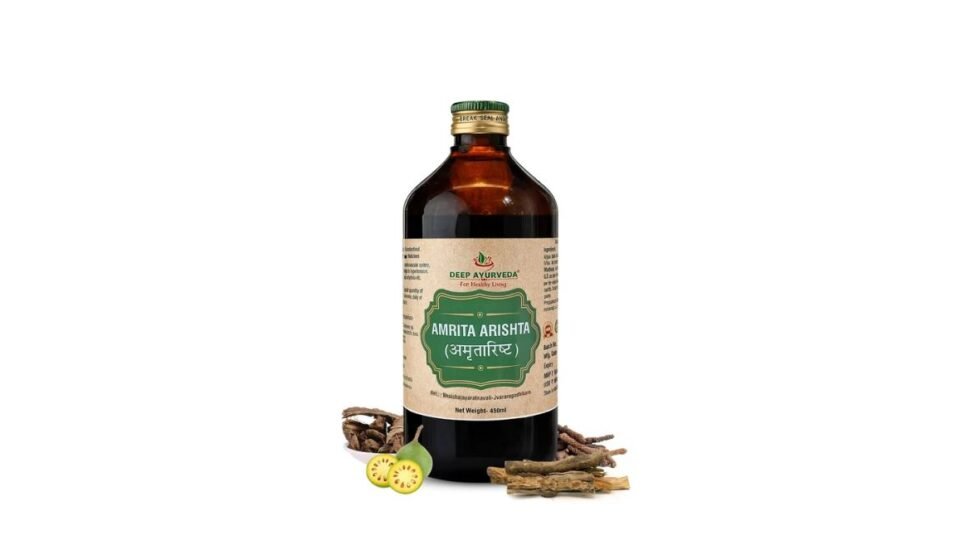
Amritarishta is a classical Ayurvedic fermented herbal formulation primarily prepared with Guduchi (Tinospora cordifolia) and other traditional herbs. It has been traditionally used in Ayurveda to support overall wellness, aid recovery after illness, promote digestive strength, and help maintain healthy immune function. As with any Ayurvedic medicine, it should be taken under the guidance of a qualified Ayurvedic practitioner to ensure it is appropriate for an individual’s constitution and health needs.
Quick Facts About Amritarishta
| Feature | Details |
|---|---|
| Classical Formulation | Arishta |
| Main Herb | Guduchi (Tinospora cordifolia) |
| Dosage Form | Fermented Ayurvedic Liquid |
| Traditional System | Ayurveda |
| Taste | Predominantly Bitter and Astringent |
| Recommended By | Qualified Ayurvedic Practitioner |
| Suitable For | Adults (unless advised otherwise) |
| Best Time to Take | As directed by an Ayurvedic doctor |
| Storage | Store in a cool, dry place away from direct sunlight |
Introduction
Ayurveda is one of the world’s oldest traditional systems of healthcare, with a history spanning thousands of years. Among its many classical formulations, Amritarishta has earned a respected place because of its traditional use in supporting overall health and recovery. Rather than focusing on a single symptom, Ayurveda views health through a holistic lens, considering digestion (Agni), body constitution (Prakriti), tissue nourishment (Dhatus), and the balance of the three Doshas—Vata, Pitta, and Kapha.
Amritarishta reflects this holistic philosophy. It is a fermented herbal formulation, traditionally prepared using Guduchi (Giloy) as the principal ingredient along with several other herbs. The natural fermentation process creates a self-generated preservative and enhances the delivery of herbal constituents, making the formulation unique among Ayurvedic preparations.
Today, Amritarishta continues to be widely used in Ayurvedic practice and is recognized by people seeking traditional wellness approaches. However, understanding what it is, how it is prepared, when it is traditionally used, and how to take it safely is essential before including it in any wellness routine.
What is Amritarishta?
Amritarishta is a classical Ayurvedic fermented herbal formulation (Arishta) described in traditional Ayurvedic texts. It is prepared using Guduchi (Tinospora cordifolia) as its primary herb, combined with carefully selected medicinal plants and a natural fermentation process.
Unlike modern syrups or herbal tonics, Amritarishta is produced through traditional Ayurvedic methods in which herbal decoctions are fermented using natural ingredients such as jaggery or sugar. During fermentation, a small amount of naturally occurring alcohol is generated. This alcohol is not added separately; instead, it forms naturally and helps preserve the formulation while supporting the extraction of beneficial plant compounds.
In Ayurveda, Amritarishta is traditionally valued for its role in promoting balance within the body, supporting digestive strength, and contributing to overall well-being. Its selection is always based on an individual’s constitution, current imbalance, and the judgement of a qualified Ayurvedic practitioner.
Why is it Called Amritarishta?
The word Amrita comes from Sanskrit and literally means nectar of immortality or that which supports longevity and vitality. In Ayurvedic literature, this name is closely associated with Guduchi (Tinospora cordifolia), a herb traditionally revered for its rejuvenating (Rasayana) qualities.
The second part of the name, Arishta, refers to a category of Ayurvedic fermented herbal formulations prepared using a time-tested natural fermentation process. These formulations are designed to preserve herbal constituents while making them easier for the body to absorb.
Together, the name Amritarishta reflects both its principal ingredient and its traditional preparation method. Rather than implying immortality, it symbolises Ayurveda’s emphasis on promoting vitality, resilience, and long-term wellness through balanced living and appropriate herbal support.
The History of Amritarishta in Ayurveda
Amritarishta has its roots in the rich heritage of classical Ayurveda, where fermented herbal preparations have been used for centuries. Ancient Ayurvedic physicians recognised that fermentation could naturally preserve herbal formulations and improve their shelf life without relying on synthetic additives.
Over generations, Amritarishta has remained an important formulation because of its association with Guduchi, one of Ayurveda’s most respected herbs. Traditional practitioners have valued it within the broader context of maintaining health, supporting recovery, and promoting overall balance, always tailoring recommendations to the individual’s unique constitution and health status.
Today, modern manufacturing follows established Ayurvedic pharmacopeial standards while maintaining the core principles of the traditional preparation process.
What Makes Amritarishta Different from Other Arishtas?
Ayurveda includes many fermented formulations known as Arishtas, each prepared with a different combination of herbs and intended for different traditional purposes.
What distinguishes Amritarishta is:
- Guduchi (Tinospora cordifolia) serves as the principal herb, giving the formulation its unique Ayurvedic identity.
- It is traditionally regarded as a Rasayana, meaning it is associated with rejuvenation and long-term wellness in Ayurvedic practice.
- It combines the advantages of herbal decoction with natural fermentation, which enhances stability and supports the extraction of herbal constituents.
- Its formulation is designed according to classical Ayurvedic principles rather than targeting a single symptom or condition.
Because every individual is different, Ayurvedic practitioners choose among various Arishtas based on a comprehensive assessment rather than selecting one formulation for everyone.
How is Amritarishta Prepared?
One of the most distinctive aspects of Amritarishta is its traditional natural fermentation process, a method that has been refined in Ayurveda over centuries.
The preparation begins with a decoction made by boiling carefully selected herbs in water. Once the decoction reaches the desired concentration, natural sweetening agents such as jaggery or sugar are added. Specific herbs are then incorporated according to the classical formulation.
The mixture is transferred into fermentation vessels and allowed to ferment under controlled conditions for a defined period. During this stage, naturally occurring microorganisms convert part of the sugar into a small amount of self-generated alcohol. This natural alcohol serves as a preservative and helps extract and retain valuable plant constituents.
After fermentation is complete, the liquid is filtered, matured, and quality-tested before packaging.
This traditional process contributes to the characteristic aroma, taste, and stability of Amritarishta while preserving the integrity of the herbal formulation.
Key Ingredients of Amritarishta
Amritarishta is prepared using Guduchi (Tinospora cordifolia) as its principal ingredient, along with a carefully selected combination of herbs that work together according to Ayurvedic principles. While the exact composition may vary slightly depending on the classical reference followed by the manufacturer, the formulation is designed to provide a balanced synergistic effect rather than relying on a single herb.
The table below highlights some of the commonly used ingredients and their traditional Ayurvedic roles.
| Ingredient | Botanical Name | Traditional Ayurvedic Role |
|---|---|---|
| Guduchi (Giloy) | Tinospora cordifolia | Traditionally regarded as a Rasayana herb that supports overall vitality and helps maintain Dosha balance. |
| Dashamoola | Classical combination of ten roots | Traditionally used to support healthy Vata balance and overall well-being. |
| Musta | Cyperus rotundus | Traditionally valued for supporting digestion and maintaining digestive balance. |
| Parpataka | Fumaria parviflora / Classical source reference | Traditionally included to help maintain internal balance during seasonal changes. |
| Ativisha | Aconitum heterophyllum | Traditionally used in Ayurveda after appropriate purification and processing as described in classical texts. |
| Indrayava | Holarrhena antidysenterica | Traditionally used to support digestive health. |
| Guda (Jaggery) | Natural sweetener | Acts as a fermentation substrate and contributes to the natural preparation process. |
| Dhataki Flowers | Woodfordia fruticosa | Facilitate natural fermentation in traditional Arishta preparations. |
Note: Ingredient composition may vary slightly depending on the manufacturer and the Ayurvedic pharmacopeial reference used. Always refer to the product label for the exact formulation.
Why Guduchi is the Heart of Amritarishta
Among all the herbs used in Amritarishta, Guduchi (Giloy) holds a special place. In Ayurveda, Guduchi is often referred to as Amrita, a name that symbolizes vitality and rejuvenation rather than implying miraculous effects.
Guduchi has traditionally been valued as a Rasayana, a category of herbs associated with supporting long-term health, resilience, and overall well-being. Ayurvedic practitioners often consider Guduchi when the goal is to promote balance, nourish body tissues (Dhatus), and support healthy digestive fire (Agni).
Modern scientific research has also explored Guduchi for its phytochemical profile, which includes alkaloids, diterpenoid lactones, glycosides, steroids, and polysaccharides. While research is ongoing, Ayurveda continues to emphasize that Guduchi’s benefits are best understood within the context of the complete formulation and an individual’s constitution rather than as a standalone ingredient.
Ayurvedic Properties (Ayurvedic Pharmacology) of Amritarishta
Ayurveda evaluates every formulation based on its Dravyaguna (Ayurvedic pharmacology), which helps practitioners understand how it interacts with the body’s natural functions.
Although the overall formulation contains multiple herbs with varying properties, Amritarishta is traditionally understood through the following general Ayurvedic characteristics.
| Ayurvedic Principle | Traditional Description |
|---|---|
| Rasa (Taste) | Predominantly Tikta (Bitter) and Kashaya (Astringent) |
| Guna (Qualities) | Laghu (Light), Ruksha (Dry) |
| Virya (Potency) | Generally considered Ushna (Warm) in action due to the overall formulation and fermentation process, though individual herbs differ. |
| Vipaka (Post-digestive Effect) | Traditionally understood as Katu (Pungent) |
| Primary Dosha Action | Traditionally supports the balance of Pitta and Kapha while helping maintain healthy Vata when prescribed appropriately. |
| Classical Category | Arishta (Fermented Ayurvedic Formulation) |
| Traditional Ayurvedic Classification | Rasayana (Rejuvenative Support) |
These properties help Ayurvedic practitioners decide whether Amritarishta is suitable for an individual after assessing their constitution (Prakriti), current imbalance (Vikriti), digestive strength (Agni), and overall health.
Understanding Amritarishta Through Ayurveda
One of the most distinctive features of Ayurveda is that it does not evaluate health by looking at symptoms alone. Instead, it considers the body’s internal balance and how different systems work together.
According to Ayurvedic philosophy, good health depends on the proper functioning of:
- Agni (Digestive Fire): Responsible for digestion, absorption, and transformation of food into nourishment.
- Doshas (Vata, Pitta, Kapha): The three fundamental energies that govern bodily functions.
- Dhatus (Body Tissues): Seven tissues that support growth, repair, and vitality.
- Srotas (Body Channels): Pathways through which nutrients, wastes, and vital substances circulate.
- Ojas: Considered the essence of well-nourished tissues and associated with strength, vitality, and resilience.
From this perspective, Amritarishta is traditionally used as part of a broader Ayurvedic approach that seeks to support these interconnected systems rather than addressing a single symptom in isolation.
How Does Amritarishta Work According to Ayurveda?
Ayurveda explains the action of herbal formulations through their influence on digestion, metabolism, tissue nourishment, and Dosha balance.
Amritarishta is traditionally understood to work by supporting healthy Agni, which is considered the foundation of overall well-being. When digestion and metabolism function efficiently, the body is better able to utilize nutrients and maintain balance across its tissues and systems.
Because Guduchi is regarded as a Rasayana herb, Amritarishta is also traditionally associated with supporting the nourishment of body tissues and promoting vitality. The natural fermentation process is believed to assist in delivering the herbal constituents in a form that is easier for the body to utilize.
Rather than producing immediate or isolated effects, Ayurvedic formulations like Amritarishta are traditionally viewed as part of a comprehensive wellness approach that includes appropriate diet, lifestyle, seasonal routines, and individualized guidance from a qualified practitioner.
A Modern Scientific Perspective
Modern research has investigated several herbs found in Amritarishta, particularly Guduchi (Tinospora cordifolia), for their phytochemical composition and biological activities. Researchers have identified naturally occurring compounds such as alkaloids, diterpenoids, glycosides, steroids, and polysaccharides, which continue to be studied for their potential health-related properties.
The fermentation process itself has also attracted scientific interest. In traditional Ayurvedic formulations, natural fermentation may help preserve the preparation and enhance the extraction of certain plant constituents. However, the complete clinical effects of classical formulations like Amritarishta require further high-quality research.
It is important to understand that modern scientific studies often investigate individual herbs or specific extracts, whereas Ayurveda evaluates the formulation as a whole and tailors its use to the individual. These two approaches complement rather than replace each other, offering different perspectives on the same traditional preparation.
Health Benefits of Amritarishta
Amritarishta has been used in Ayurveda for centuries as part of a holistic approach to health and well-being. Its benefits are understood in the context of balancing the body’s natural functions rather than targeting a single symptom or disease.
It is important to remember that Ayurvedic medicines are selected based on an individual’s constitution (Prakriti), current imbalance (Vikriti), digestive strength (Agni), age, and overall health. Therefore, the traditional uses described below should not be interpreted as a recommendation for self-treatment.
How Ayurveda Views the Benefits of Amritarishta
In Ayurveda, optimal health depends on the harmonious functioning of digestion, metabolism, body tissues, and the three Doshas. When these systems become imbalanced, overall vitality may be affected.
Amritarishta is traditionally valued because it is believed to:
- Support healthy digestive fire (Agni)
- Promote balance among the Doshas
- Help nourish body tissues (Dhatus)
- Support the body’s natural resilience (Ojas)
- Contribute to overall rejuvenation (Rasayana)
Rather than offering instant relief, Ayurveda considers formulations like Amritarishta as part of a long-term wellness strategy combined with a balanced diet, healthy lifestyle, and appropriate clinical guidance.
1. Traditionally Used to Support Healthy Immune Function
Guduchi, the principal herb in Amritarishta, is widely regarded in Ayurveda as one of the most respected Rasayana herbs. Rasayana therapies are traditionally associated with promoting vitality, resilience, and overall wellness.
For this reason, Ayurvedic practitioners have traditionally included Amritarishta as part of individualized wellness plans aimed at supporting the body’s natural defence mechanisms.
From a modern perspective, Guduchi has attracted scientific interest because of its diverse phytochemical profile. However, more high-quality clinical studies are needed to fully understand the effects of the complete formulation.
Doctor’s Perspective
In clinical Ayurvedic practice, supporting immunity is never limited to recommending a herbal formulation alone. We also evaluate digestion, sleep quality, stress levels, dietary habits, and seasonal factors because these all influence long-term health.
2. Traditionally Used During Recovery After Illness
Recovery does not always end when symptoms improve. Many individuals experience temporary tiredness, reduced appetite, or low energy while returning to their normal routine.
Ayurveda traditionally considers this recovery phase important for rebuilding strength and restoring internal balance. Depending on the individual’s condition, Amritarishta may be considered by an Ayurvedic practitioner as part of a broader recovery plan that also includes suitable nutrition and lifestyle recommendations.
Clinical Insight
Recovery plans in Ayurveda are highly individualized. The goal is not simply to regain physical energy but also to support healthy digestion and tissue nourishment so that overall well-being is restored gradually.
3. Helps Support Healthy Digestion and Metabolic Balance
According to Ayurveda, Agni (digestive fire) is the foundation of good health. Efficient digestion helps the body transform food into nourishment while maintaining the balance of the Doshas.
Amritarishta is traditionally valued for supporting healthy digestive function, particularly when reduced digestive strength is believed to contribute to general imbalance.
Supporting digestion may also help improve appetite and overall nutritional well-being as part of a comprehensive Ayurvedic approach.
4. Supports Overall Vitality and Rejuvenation
One of the defining characteristics of Amritarishta is its classification as a Rasayana formulation.
Rasayana therapies are traditionally associated with:
- Supporting healthy ageing
- Promoting vitality
- Nourishing body tissues
- Maintaining overall wellness
- Encouraging resilience during seasonal changes
Rather than focusing on one body system, Rasayana formulations are intended to support the body’s natural capacity to maintain balance over time.
5. Helps Maintain Healthy Liver Function
The liver plays an essential role in metabolism, digestion, and overall physiological balance.
Several herbs used in Amritarishta have traditionally been associated with supporting healthy liver function within Ayurvedic practice. From an Ayurvedic perspective, maintaining efficient digestion and metabolism contributes to better overall health.
While laboratory and animal studies have investigated certain herbs used in the formulation, more robust human clinical research is required before drawing conclusions about the complete preparation.
6. Traditionally Used to Support Healthy Inflammatory Balance
Ayurveda describes inflammation through different concepts than modern medicine, often relating it to Dosha imbalance and impaired digestive function.
Amritarishta has traditionally been used in formulations intended to support the body’s natural balance when inflammation-related concerns are assessed by an Ayurvedic practitioner.
It should not be viewed as a substitute for medical evaluation when inflammation is persistent, severe, or associated with serious health conditions.
7. Supports General Well-Being During Seasonal Changes
Seasonal transitions may influence digestion, appetite, energy levels, and general well-being.
Ayurveda emphasizes adapting diet, daily routines, and herbal support according to seasonal variations. Depending on individual needs, Amritarishta may be recommended during these transitions to help maintain balance.
This recommendation is always personalized rather than universally applied.
8. Traditionally Supports Healthy Tissue Nourishment (Dhatu Poshana)
Ayurveda explains that the body is supported by seven fundamental tissues known as Dhatus.
These include:
- Rasa (nutritive fluid)
- Rakta (blood)
- Mamsa (muscle)
- Meda (fat tissue)
- Asthi (bone)
- Majja (marrow and nervous tissue)
- Shukra (reproductive tissue)
Healthy digestion enables proper nourishment of these tissues.
Because Amritarishta is traditionally regarded as a Rasayana formulation, Ayurvedic practitioners may include it within broader treatment plans intended to support healthy tissue nourishment.
9. Supports Overall Wellness Rather Than Targeting a Single Symptom
One of the greatest strengths of Ayurveda is its holistic philosophy.
Instead of asking,
Which medicine treats this symptom?
Ayurveda asks,
Why has this imbalance developed, and how can the body’s natural balance be restored?
Amritarishta reflects this philosophy by being used as part of individualized wellness plans rather than as a one-size-fits-all solution.
Traditional Uses of Amritarishta in Ayurveda
Classical Ayurvedic practitioners have traditionally used Amritarishta in carefully selected situations based on an individual’s constitution and clinical assessment.
It has been traditionally considered in Ayurvedic practice for supporting:
- General health and vitality
- Recovery after illness
- Healthy digestive function
- Seasonal wellness routines
- Rasayana (rejuvenation) programs
- Overall balance of the body’s natural functions
These traditional uses are based on Ayurvedic principles and should not replace professional medical advice or treatment.
Who May Benefit from Amritarishta?
A qualified Ayurvedic practitioner may consider Amritarishta as part of an individualized wellness plan for people who:
- Are recovering after an illness and need holistic support.
- Experience reduced appetite associated with temporary digestive weakness.
- Wish to include a classical Rasayana formulation in their wellness routine under professional supervision.
- Want to support overall vitality through Ayurvedic principles.
- Are looking to complement healthy lifestyle practices with traditional herbal formulations.
The decision to recommend Amritarishta always depends on the person’s constitution, medical history, current medications, and overall health goals.
When Do Ayurvedic Doctors Choose Amritarishta?
Selecting an Ayurvedic formulation is rarely based on a diagnosis alone.
During a consultation, we typically assess:
- Individual body constitution (Prakriti)
- Current Dosha imbalance (Vikriti)
- Digestive strength (Agni)
- Bowel habits
- Sleep quality
- Appetite
- Lifestyle
- Seasonal influences
- Existing medical conditions
- Current medications
Only after this comprehensive assessment do we determine whether Amritarishta is appropriate or whether another classical formulation would better suit the individual’s needs.
For example, if the primary Ayurvedic assessment indicates concerns related to circulation and tissue support rather than the traditional indications for Amritarishta, another formulation may be considered. Likewise, in certain clinical situations, practitioners may recommend different classical preparations depending on the individual’s Dosha balance and therapeutic goals. This personalized decision-making is one of the key principles that distinguishes Ayurveda from a one-size-fits-all approach.
If you’re interested in learning about other classical Ayurvedic formulations, you may also find our guide on Mahamanjisthadi Kwath helpful. It explains the traditional Ayurvedic perspective, ingredients, uses, and practical considerations for another well-known classical preparation. Linking related educational resources helps readers understand that different formulations are selected based on individual assessment rather than being interchangeable.
Dosage of Amritarishta
The appropriate dosage of Amritarishta varies from person to person. In Ayurveda, dosage is not determined solely by age or body weight. Instead, an Ayurvedic practitioner also considers factors such as Prakriti (body constitution), Vikriti (current imbalance), Agni (digestive strength), age, season, overall health, and the purpose of use.
For this reason, there is no single dosage that is suitable for everyone.
General Adult Dosage
The dosage recommended on the product label or by a qualified Ayurvedic practitioner should always be followed. Traditionally, Amritarishta is taken in a measured quantity and is often diluted with an equal amount of water before consumption, depending on the specific product instructions.
Dosage for Children
Children should not be given Amritarishta unless it has been specifically recommended by a qualified Ayurvedic practitioner or healthcare professional. The dosage, if advised, is determined according to the child’s age, health condition, and individual assessment.
Older Adults
Older adults may have different digestive capacity and health considerations. A healthcare professional may adjust the dosage based on the individual’s overall health, current medications, and digestive strength.
Important: Never increase the dosage on your own in the hope of achieving faster results. More is not necessarily better, and excessive intake may increase the likelihood of unwanted effects.
How to Take Amritarishta
Taking Amritarishta correctly is just as important as selecting the right formulation.
General Guidelines
- Take it exactly as advised by your Ayurvedic practitioner or according to the product label.
- If recommended, dilute it with an equal quantity of water before consumption.
- Use the measuring cup or spoon provided with the product to ensure accurate dosing.
- Maintain consistency by taking it at the same time each day.
- Do not consume directly from the bottle to avoid contamination.
Before or After Meals?
The timing may vary depending on the individual’s digestive strength and the practitioner’s recommendation. Some formulations are traditionally advised after meals, while others may be taken at different times based on the clinical assessment.
Always follow the instructions provided by your healthcare professional or the manufacturer.
What is the Best Time to Take Amritarishta?
There is no universal “best time” that applies to everyone.
An Ayurvedic practitioner may recommend the timing based on:
- Your digestive strength (Agni)
- Daily routine
- Health goals
- Other medicines or supplements you are taking
- Seasonal considerations
Maintaining a consistent schedule is generally more important than choosing a specific hour of the day.
How Long Should Amritarishta Be Taken?
The duration of use depends on the individual’s health status and the purpose for which it has been recommended.
Some people may use it for a relatively short period, while others may be advised to continue it for longer under professional supervision.
Regular follow-up with an Ayurvedic practitioner helps ensure that the formulation remains appropriate as your health needs change over time.
What Happens If You Miss a Dose?
If you forget to take a scheduled dose:
- Take it when you remember if it is not close to your next scheduled dose.
- If it is almost time for your next dose, skip the missed dose.
- Continue with your normal schedule.
- Do not double the dose to compensate for a missed one.
Diet Recommendations While Taking Amritarishta
Ayurveda places equal importance on Ahara (diet) and Aushadha (medicine). A balanced diet can complement the traditional use of Ayurvedic formulations and support overall well-being.
Foods That May Support Overall Wellness
- Freshly prepared home-cooked meals
- Seasonal fruits and vegetables
- Whole grains
- Adequate hydration
- Light, balanced meals that are easy to digest
- Foods appropriate to your constitution and the season
Foods to Limit
Depending on your individual needs, an Ayurvedic practitioner may recommend limiting:
- Highly processed foods
- Excessively oily or fried foods
- Refined sugar in large amounts
- Heavy meals late at night
- Excess alcohol
- Foods that are difficult for you to digest
Dietary advice should always be individualized rather than universally applied.
Lifestyle Tips That Complement Ayurvedic Care
Ayurveda emphasizes that good health is supported by daily habits as much as by herbal formulations.
Maintain a Consistent Daily Routine
Regular sleep and meal timings help support healthy digestion and overall balance.
Prioritize Quality Sleep
Adequate sleep contributes to physical recovery, mental well-being, and healthy daily functioning.
Stay Physically Active
Choose an activity appropriate for your fitness level, such as walking, yoga, stretching, or other forms of regular exercise.
Manage Stress
Meditation, breathing exercises, mindfulness, and relaxation techniques may help support emotional well-being as part of a healthy lifestyle.
Stay Hydrated
Adequate fluid intake supports normal physiological functions and complements a balanced diet.
Doctor’s Advice: No Ayurvedic medicine can replace healthy lifestyle habits. The best results are achieved when herbal formulations, diet, exercise, sleep, and stress management work together.
Who Should Avoid Amritarishta?
Although Amritarishta is a classical Ayurvedic formulation, it is not suitable for everyone.
Consult a qualified healthcare professional before use if you:
- Are pregnant or planning a pregnancy.
- Are breastfeeding.
- Have a serious medical condition.
- Have liver disease or significant kidney disease.
- Have diabetes or need to monitor sugar intake, as some formulations contain sweetening agents used during preparation.
- Are taking prescription medicines.
- Have a known allergy to any of the ingredients.
- Are under the legal drinking age in your country, as fermented Arishta preparations naturally contain a small amount of self-generated alcohol.
Never begin any herbal medicine without professional guidance if you have ongoing medical concerns.
Possible Side Effects of Amritarishta
When used appropriately under professional guidance, Amritarishta is generally well tolerated by many individuals. However, as with any herbal formulation, side effects are possible.
Some people may experience:
- Mild digestive discomfort
- Temporary stomach upset
- Changes in bowel habits
- Individual sensitivity to one or more ingredients
If you notice persistent discomfort, allergic reactions, or any unexpected symptoms after taking Amritarishta, discontinue use and consult a qualified healthcare professional promptly.
Can Amritarishta Interact with Other Medicines?
Herbal formulations can interact with prescription medicines, over-the-counter products, or dietary supplements.
If you are taking medication for:
- Diabetes
- High blood pressure
- Heart conditions
- Blood-thinning therapy
- Autoimmune disorders
- Chronic illnesses
inform both your physician and your Ayurvedic practitioner before starting Amritarishta. This allows your healthcare team to determine whether it is appropriate for your individual situation.
Is Amritarishta Safe During Pregnancy?
The safety of Amritarishta during pregnancy has not been established for routine self-use.
Pregnant women should not take Amritarishta unless it has been specifically recommended by a qualified healthcare professional after evaluating the potential benefits and risks.
Self-medication during pregnancy should always be avoided.
Is Amritarishta Safe While Breastfeeding?
If you are breastfeeding, consult your doctor or a qualified Ayurvedic practitioner before using Amritarishta.
The decision should be based on your individual health status, medical history, and the needs of both mother and infant.
Storage Instructions
Proper storage helps maintain the quality of Ayurvedic formulations.
Follow these recommendations:
- Store in a cool, dry place.
- Protect from direct sunlight.
- Keep the bottle tightly closed after each use.
- Do not refrigerate unless the manufacturer specifically advises it.
- Keep out of reach of children.
- Check the expiry date before use.
- Do not use the product if the seal is broken or the appearance changes unexpectedly.
Common Mistakes to Avoid While Taking Amritarishta (Unique Value Section)
Many people assume that taking more herbal medicine will produce faster results. In Ayurvedic practice, this is a misconception. The effectiveness of a formulation depends not only on the medicine itself but also on choosing the right formulation, the correct dosage, appropriate timing, and supportive diet and lifestyle.
Avoid these common mistakes:
- Self-prescribing without professional guidance.
- Taking a higher dose than recommended.
- Using it inconsistently.
- Ignoring dietary and lifestyle recommendations.
- Combining multiple Ayurvedic formulations without expert advice.
- Continuing use despite unwanted reactions without consulting a healthcare professional.
By avoiding these mistakes and following individualized guidance, you can use Ayurvedic formulations more safely and responsibly.
Frequently Asked Questions About Amritarishta
What is Amritarishta used for in Ayurveda?
Amritarishta is a classical Ayurvedic fermented formulation traditionally used to support overall wellness, digestive strength (Agni), recovery after illness, and rejuvenation (Rasayana). Its use is individualized and based on a qualified Ayurvedic practitioner’s assessment rather than a one-size-fits-all approach.
What is the main ingredient in Amritarishta?
The principal ingredient in Amritarishta is Guduchi (Tinospora cordifolia), also known as Giloy. In Ayurveda, Guduchi is highly regarded as a Rasayana herb and is traditionally valued for supporting vitality and overall well-being.
Does Amritarishta contain alcohol?
Yes. Amritarishta contains a small amount of naturally self-generated alcohol produced during the traditional fermentation process. No alcohol is added separately. This natural fermentation helps preserve the formulation and assists in extracting herbal constituents.
Can Amritarishta be taken every day?
Whether Amritarishta should be taken daily depends on the individual’s health condition, constitution, treatment goals, and the advice of a qualified Ayurvedic practitioner. It should not be used routinely without professional guidance.
Is Amritarishta safe for long-term use?
The duration of use varies from person to person. Long-term use should only be continued under the supervision of a qualified Ayurvedic practitioner who can periodically review whether the formulation remains appropriate for your needs.
Can people with diabetes take Amritarishta?
Some Amritarishta formulations use jaggery or sugar during the fermentation process. If you have diabetes or are monitoring your blood glucose, consult your doctor or Ayurvedic practitioner before using it. They can determine whether it is suitable for your individual situation.
Can Amritarishta be taken with modern medicines?
Herbal formulations may interact with prescription medicines or dietary supplements. If you are taking medication for any ongoing medical condition, inform both your physician and your Ayurvedic practitioner before starting Amritarishta.
Is Amritarishta suitable during pregnancy?
Pregnant women should not take Amritarishta unless it has been specifically recommended by a qualified healthcare professional after evaluating the potential benefits and risks.
Can breastfeeding mothers use Amritarishta?
Breastfeeding mothers should consult a healthcare professional before taking Amritarishta. Individual assessment is important to ensure that the formulation is appropriate for both mother and baby.
Can Amritarishta be taken on an empty stomach?
The timing of Amritarishta depends on the individual’s digestive strength and the practitioner’s recommendation. Always follow the instructions provided by your healthcare professional or the product label.
How should Amritarishta be stored?
Store Amritarishta in a cool, dry place away from direct sunlight. Keep the bottle tightly closed after use and always check the expiry date before consumption.
Is Amritarishta the same as Giloy Juice?
No. Although Guduchi (Giloy) is the primary herb in Amritarishta, the two products are different. Amritarishta is a classical fermented Ayurvedic formulation prepared with multiple herbs, whereas Giloy juice is generally a single-herb preparation. Their composition, preparation methods, and traditional uses are not the same.
Conclusion
Amritarishta is one of Ayurveda’s time-honoured fermented herbal formulations, with Guduchi (Tinospora cordifolia) at its core. Traditionally valued as a Rasayana, it reflects Ayurveda’s holistic philosophy of supporting digestion, nourishing body tissues, and promoting overall balance rather than focusing on a single symptom.
Understanding how Amritarishta is prepared, its traditional ingredients, Ayurvedic principles, dosage, safety considerations, and lifestyle recommendations helps you make informed decisions about its use. Equally important is recognizing that Ayurveda is an individualized system of healthcare. The same formulation may not be appropriate for everyone, and professional guidance plays a key role in selecting the right approach.
If you are interested in exploring classical Ayurvedic formulations further, you may also enjoy reading our guide on Mahamanjisthadi Kwath, which explains another traditional preparation and how Ayurvedic practitioners select different formulations based on an individual’s unique constitution and health goals.
With the right guidance and a balanced lifestyle, Ayurvedic formulations like Amritarishta can be integrated thoughtfully into a comprehensive wellness journey while respecting both traditional wisdom and modern healthcare principles.