Khadirarishta: Complete Ayurvedic Guide to Benefits, Uses, Dosage, Side Effects

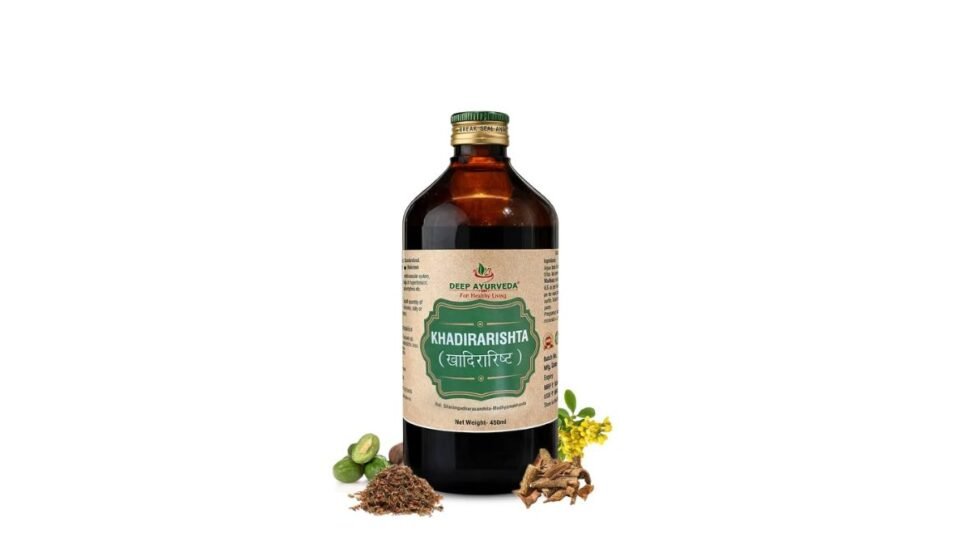
Khadirarishta is one of the classical Ayurvedic fermented formulations traditionally associated with skin health, Rakta-related disorders and certain digestive concerns. It is prepared primarily with Khadira (Acacia catechu) along with other herbs and undergoes natural fermentation as part of the Arishta preparation method.
In Ayurveda, Khadirarishta is often described as a Rakta Shodhaka formulation, which is why it is commonly called an Ayurvedic blood purifier. However, this term needs to be understood correctly: Rakta Shodhana in Ayurveda is a traditional therapeutic concept and should not be interpreted as literally cleaning the blood in the modern medical sense.
In my Ayurvedic practice, I find that people often approach Khadirarishta with a very simple question: Will this medicine clear my skin? The Ayurvedic answer is more nuanced. Skin health is not always viewed as an isolated external problem. Depending on the individual, Ayurveda may consider digestion, Agni, Dosha involvement, Rakta, diet, lifestyle and the nature of the skin complaint together.
This complete guide explains Khadirarishta benefits, uses, ingredients, dosage, how to take it, side effects, precautions, fermentation, the meaning of blood purification, and what modern research actually tells us.
What Is Khadirarishta?
Khadirarishta, also known as Khadirarishtam or Khadirarisht, is a classical Ayurvedic fermented herbal preparation in which Khadira is the principal ingredient.
It belongs to the Arishta category of Ayurvedic formulations. Unlike an ordinary herbal decoction, an Arishta undergoes a controlled fermentation process, traditionally using sweetening substances and fermentation-supporting herbs such as Dhataki.
Classical Ayurvedic references associate Khadirarishta with conditions falling under categories such as Tvak Roga (skin disorders), Kushtha and Krimi. The Government of India’s Essential Drugs List for Ayurveda also lists Khadirarishta under the Ayurvedic Formulary of India (AFI), with a reference dosage of 12–24 ml.
Modern consumer and medical websites commonly describe Khadirarishta as a formulation used traditionally for skin-related concerns such as itching, rashes and acne. However, high-quality clinical evidence specifically evaluating the complete formulation for individual modern diseases remains limited.
Why Is Khadira Important in Khadirarishta?
Khadira is the central herb of this formulation.
Its botanical name is Acacia catechu, and its heartwood has a long history of use in Ayurvedic formulations.
From an Ayurvedic perspective, Khadira is particularly associated with Kushta and Rakta-related therapeutic approaches, which helps explain why Khadirarishta became closely associated with skin health.
This is also why simply looking at Khadirarishta as a modern detox drink misses the actual Ayurvedic reasoning behind the formulation.
Khadirarishta Ingredients
The classical formulation contains several herbs that work together rather than functioning as a single-herb preparation.
Commonly described ingredients include:
| Ayurvedic Ingredient | Botanical Name | Traditional Relevance |
|---|---|---|
| Khadira | Acacia catechu | Principal herb; traditionally associated with skin and Rakta |
| Devadaru | Cedrus deodara | Used traditionally in Dosha-related and skin formulations |
| Bakuchi | Psoralea corylifolia | Traditionally important in specific skin disorders |
| Daruharidra | Berberis aristata | Traditionally used in skin-oriented formulations |
| Haritaki | Terminalia chebula | Digestive and Rasayana-oriented role |
| Bibhitaki | Terminalia bellirica | One component of Triphala |
| Amalaki | Emblica officinalis | One component of Triphala |
| Dhataki | Woodfordia fruticosa | Important in traditional fermentation |
| Kankola | Piper cubeba | Aromatic Prakshepa ingredient |
| Nagakesara | Mesua ferrea | Traditional supporting ingredient |
| Twak | Cinnamomum verum | Aromatic digestive-supportive ingredient |
| Ela | Elettaria cardamomum | Aromatic Prakshepa ingredient |
| Jatiphala | Myristica fragrans | Traditional aromatic ingredient |
| Pippali | Piper longum | Traditionally associated with Agni and digestion |
The exact ingredient list and quantities can vary according to the classical reference, manufacturing standard and product formulation, so the label of the specific Khadirarishta you purchase should always be checked. Classical formulation references and commercial formulations show overlapping but sometimes differently presented ingredient details.
How Is Khadirarishta Prepared?
One of the most interesting things about Khadirarishta is that it is fermented.
The traditional preparation broadly involves:
1. Preparation of the herbal decoction
The principal herbs are processed to prepare a concentrated herbal decoction.
2. Addition of sweetening ingredients
Traditional Arishta preparations use ingredients such as jaggery, sugar or honey depending on the formulation.
3. Addition of fermentation-supporting ingredients
Dhataki is traditionally used in many Arishta preparations to support fermentation.
4. Natural fermentation
The prepared mixture is allowed to undergo controlled fermentation.
5. Maturation and filtration
After fermentation and maturation, the preparation is filtered and processed into the final liquid formulation.
This process is important because Khadirarishta is not simply Khadira decoction bottled as a syrup.
The fermentation process is also the reason Arishta preparations can contain self-generated alcohol. The exact alcohol level may vary with preparation and manufacturer, so consumers should check the product label rather than assuming a single percentage for every product.
Khadirarishta Benefits
The benefits traditionally attributed to Khadirarishta are primarily discussed around skin health, Rakta-related Ayurvedic concepts and digestion.
However, it is important to separate traditional Ayurvedic use from claims that have been conclusively established through modern clinical trials.
1. Traditionally Supports Skin Health
Khadirarishta is most commonly associated with Ayurvedic approaches to skin disorders.
Khadira, along with other herbs in the formulation, gives Khadirarishta its traditional position in skin-oriented Ayurvedic treatment.
It may be considered by an Ayurvedic practitioner when symptoms such as itching, recurrent rashes or other skin complaints are evaluated as part of a broader Ayurvedic picture.
It should not, however, be presented as a guaranteed cure for eczema, psoriasis, acne or any other diagnosed skin disease.
2. Traditionally Used for Itching and Skin Irritation
Itching is one of the common reasons people search for Khadirarishta.
Classical and modern Ayurvedic product references describe its use in conditions involving itching, rashes, inflammation and other skin discomforts.
From an Ayurvedic perspective, the important question is not simply:
How severe is the itching?
A practitioner may also consider:
- What type of skin lesion is present?
- Is the skin dry or oily?
- Is there redness or burning?
- Is the problem acute or chronic?
- What is the person’s digestion like?
- Which Dosha appears to be involved?
- Are there dietary or lifestyle triggers?
This individual assessment is one reason Ayurveda does not treat every skin complaint in exactly the same way.
3. May Be Considered in Acne-Prone Skin
Khadirarishta is frequently marketed and discussed for acne and pimples.
Traditional Ayurvedic use gives the formulation a place in skin-focused management, and several commercial references mention acne among its traditional applications.
But acne can have multiple contributing factors. Hormonal changes, skincare products, medications, diet, stress and other medical factors may all be relevant.
Therefore, Khadirarishta should not be described as a standalone guaranteed acne treatment.
An Ayurvedic physician may instead consider whether the person’s overall presentation suggests a need to address digestion, diet, lifestyle and internal Ayurvedic factors alongside appropriate skin care.
4. Traditionally Used in Certain Chronic Skin Disorders
Khadirarishta has a strong traditional association with Kushta, the broad Ayurvedic category covering various skin disorders.
The Government of India’s Ayurvedic Essential Drugs List specifically includes Tvak Roga and Kushtha among Khadirarishta’s listed indications.
This does not mean that every modern dermatological disease classified as skin disease should automatically be treated with Khadirarishta.
A diagnosed skin condition may require a different treatment approach, and persistent or severe symptoms should be medically evaluated.
5. Traditionally Supports Digestive Function
Khadirarishta contains several herbs traditionally associated with Agni and digestion, including aromatic and pungent ingredients.
Ayurveda considers digestion important when assessing many chronic complaints, including some skin presentations.
This is one of the reasons a practitioner may look beyond the skin itself when deciding whether an internal Ayurvedic formulation is appropriate.
6. Its Traditional Rakta Shodhana Role
One of the most frequently repeated descriptions of Khadirarishta is Rakta Shodhaka, or blood purifier.
But this phrase requires clarification.
What does blood purification mean in Ayurveda?
In Ayurveda, Rakta Shodhana belongs to a traditional therapeutic framework involving Rakta Dhatu and associated Dosha imbalance.
It does not mean that Khadirarishta literally filters the bloodstream in the way the kidneys or liver perform physiological functions.
Modern medical sources also caution against interpreting blood purifier as literal blood cleansing or detoxification.
Therefore, when you see Khadirarishta described as a blood purifier, understand the phrase in its Ayurvedic context, not as a modern biomedical claim.
Khadirarishta and Mahamanjisthadi Kwath: Why They Are Sometimes Discussed Together
For readers researching Ayurvedic approaches to skin health, Khadirarishta and Mahamanjisthadi Kwath naturally appear in the same conversation because both are associated with traditional skin and Rakta-oriented Ayurvedic approaches.
However, they are not interchangeable medicines.
Khadirarishta is an Arishta, meaning it is a fermented liquid preparation.
Mahamanjisthadi Kwath is a Kwath/decoction-based formulation with a different composition and therapeutic context.
In practice, whether two formulations should be used together depends on the person’s condition, Dosha, digestion, age, medicines and treatment objective.
Khadirarishta Dosage: How Much Should You Take?
There is no single universal dose that should be blindly followed by every person.
The Ayurvedic Essential Drugs List gives a reference dosage of 12–24 ml for Khadirarishta.
Commercial Ayurvedic products may provide different instructions. For example, some manufacturers recommend around 15–30 ml, while others specify different ranges.
Therefore:
General adult reference
12–24 ml is an official Ayurvedic Essential Drugs List reference, but the appropriate dose for an individual should be based on the product label and, where needed, an Ayurvedic physician’s advice.
Should it be diluted?
Many Khadirarishta products are traditionally taken with an equal quantity of water, particularly when instructed by the manufacturer or physician.
When should it be taken?
Many commercial preparations recommend taking it after meals, but the exact instruction should follow the specific product label and physician’s advice.
How to Take Khadirarishta
If your Ayurvedic physician has recommended Khadirarishta, a practical approach is:
- Measure the prescribed quantity.
- Follow the dilution instructions on the product label.
- Take it at the recommended time, commonly after meals.
- Do not increase the quantity because you want faster results.
- Maintain the recommended duration rather than using it indefinitely.
- Stop and seek professional advice if you develop significant or unusual symptoms.
Can Khadirarishta Be Taken Daily?
This is one of the most common questions.
Daily use does not automatically mean that it is appropriate for everyone.
Whether Khadirarishta should be taken daily depends on:
- Why it is being used
- Age
- Digestive strength
- Current health
- Other medicines
- Duration of treatment
- Product formulation
- Individual Ayurvedic assessment
An Ayurvedic formulation should not be treated as a harmless daily detox syrup simply because it is herbal.
How Long Does Khadirarishta Take to Show Results?
There is no scientifically established universal timeline such as 7 days, 15 days or 30 days for Khadirarishta.
This is especially important for chronic skin complaints.
If someone has had a skin problem for several months or years, expecting a classical formulation to produce a guaranteed transformation within a few days is unrealistic.
The response can depend on:
- Nature and duration of the condition
- Dosha involvement
- Diet
- Sleep
- Stress
- Digestion
- Skin-care habits
- Other medicines
- Individual constitution
A qualified practitioner should review persistent symptoms rather than simply increasing the dose.
Khadirarishta Side Effects
Khadirarishta is traditionally used as an Ayurvedic medicine, but natural does not mean free from side effects.
Possible concerns can include:
Digestive discomfort
Some people may experience gastric irritation, acidity or digestive discomfort, particularly if the formulation does not suit them.
Allergic or individual sensitivity
Any herbal ingredient can potentially cause sensitivity in susceptible individuals.
Fermentation-related alcohol
Because Khadirarishta is an Arishta preparation, it can contain self-generated alcohol from fermentation. Exact levels can vary by formulation and manufacturer.
Sugar and sweetening ingredients
Traditional fermented preparations commonly involve sweetening ingredients needed for fermentation. People with diabetes or those monitoring carbohydrate intake should therefore check the specific product composition and discuss its use with their healthcare provider.
Who Should Use Khadirarishta With Caution?
Speak with a qualified Ayurvedic physician or healthcare professional before using Khadirarishta if you:
- are pregnant or breastfeeding
- are giving it to a child
- have liver disease
- have significant gastritis or recurrent acidity
- have diabetes or need strict sugar control
- have alcohol-related restrictions
- take multiple prescription medicines
- have a known allergy to any ingredient
- have a severe or unexplained skin condition
Do not use Khadirarishta as a substitute for medical diagnosis when a skin condition is severe, rapidly worsening or associated with systemic symptoms.
Khadirarishta and Modern Research: What Do We Actually Know?
This is an area where Ayurvedic content needs to be especially careful.
Research has examined Khadirarishta and some of its individual ingredients, but the amount of high-quality clinical evidence specifically supporting Khadirarishta for modern diagnosed diseases is limited.
A published study examining Khadirarishta using GC-MS identified several compounds in the formulation. Such laboratory findings can help researchers understand its chemical profile, but they do not by themselves prove that the formulation will treat a particular disease in humans.
This distinction matters
Laboratory finding ≠ clinical cure
Traditional use ≠ modern clinical proof
Individual herb research ≠ proof of the complete formulation
This is the level of evidence transparency readers should expect from responsible Ayurvedic health content.
Khadirarishta: Traditional Claims vs Modern Understanding
| Common statement | What it actually means |
| Khadirarishta purifies blood | Traditional Rakta Shodhana terminology |
| It detoxes the body | Ayurvedic concept should not be equated with literal medical detoxification |
| It cures acne | Traditional use does not establish a guaranteed cure |
| It treats psoriasis | Evidence for the complete formulation is not conclusive |
| It is natural, so it has no side effects | Incorrect; herbal medicines can cause adverse effects |
| Everyone can take it daily | Dosage and duration should be individualized |
This distinction is particularly important because some current online content presents these claims more definitively than the available evidence supports.
Khadirarishta and Diet: Why Lifestyle Still Matters
When someone comes to me asking about an Ayurvedic medicine for recurring skin problems, one of the first things I consider is not only What medicine should they take? but also What is repeatedly aggravating the problem?
Depending on the individual, useful lifestyle considerations may include:
- Maintaining regular meal timings
- Avoiding overeating
- Paying attention to foods that consistently aggravate symptoms
- Maintaining adequate hydration
- Getting sufficient sleep
- Managing chronic stress
- Following appropriate skin hygiene
- Avoiding excessive experimentation with multiple skincare products
The purpose is not to create a universal skin diet. Ayurveda is individualized, and dietary advice should be adapted to the person’s condition.
When Should You See a Doctor Instead of Self-Medicating?
Do not rely on Khadirarishta alone when you have:
- rapidly spreading skin lesions
- severe swelling
- pus or signs of infection
- fever with a rash
- breathing difficulty
- swelling of the lips or face
- sudden widespread allergic symptoms
- unexplained yellowing of the skin or eyes
- persistent skin changes without a diagnosis
- severe or worsening symptoms
In these situations, getting the underlying condition assessed is more important than simply trying another herbal formulation.
Final Thoughts
Khadirarishta has earned an important place in Ayurvedic practice because of its traditional association with Khadira, Rakta and skin-related disorders.
But its value is better understood when we move beyond the simple phrase blood purifier.
Ayurveda does not necessarily look at recurring skin problems as something that should only be treated from the outside. Digestion, Agni, Dosha, diet, lifestyle and the individual’s overall presentation can all influence the treatment approach.
For this reason, Khadirarishta may be an appropriate formulation for one person and unnecessary for another—even when their skin symptoms appear similar.
The most responsible approach is to understand what the formulation traditionally does, what modern research can and cannot confirm, how it should be used, and when professional assessment is necessary.
If you are considering Khadirarishta for a persistent skin or other health concern, consult a qualified Ayurvedic physician for individualized guidance rather than self-prescribing it solely on the basis of online claims.
Frequently Asked Questions About Khadirarishta
What is Khadirarishta used for?
Khadirarishta is a classical Ayurvedic fermented formulation traditionally associated with skin disorders, Kushtha, Krimi and Rakta-oriented therapeutic approaches.
Is Khadirarishta a blood purifier?
It is traditionally described as a Rakta Shodhaka formulation. “Blood purifier” should be understood as an Ayurvedic therapeutic concept, not as literal cleansing of the bloodstream.
Is Khadirarishta good for skin problems?
It is traditionally used for various skin-related conditions, including itching and rashes. However, whether it is appropriate depends on the individual and the nature of the skin problem.
Can Khadirarishta be taken for acne?
Khadirarishta is traditionally associated with skin health and is commonly marketed for acne-prone skin. It should not, however, be presented as a guaranteed standalone acne cure.
What is the dosage of Khadirarishta?
The Ayurvedic Essential Drugs List gives 12–24 ml as a reference dosage. Individual products may specify different instructions, so follow the product label or physician’s advice.
Should Khadirarishta be taken with water?
Many manufacturers recommend taking it with an equal quantity of water. Follow the instructions of the specific product you are using.
Does Khadirarishta contain alcohol?
Yes. Because Khadirarishta is an Arishta preparation produced through fermentation, it can contain self-generated alcohol. The exact amount may vary by preparation and manufacturer.
Can Khadirarishta be taken daily?
It may be prescribed for regular use in some situations, but daily use is not automatically appropriate for everyone. Dose, duration and suitability should be individualized.
What are the side effects of Khadirarishta?
Some people may experience digestive discomfort, acidity or sensitivity. Its fermented nature and sweetening ingredients may also be relevant for people with certain dietary or medical considerations.
Can children take Khadirarishta?
Children should not be given Khadirarishta without guidance from a qualified healthcare professional, particularly because dosage and suitability depend on age and health status.
Can Khadirarishta cure eczema or psoriasis?
There is not enough high-quality clinical evidence to claim that Khadirarishta alone cures eczema or psoriasis. It may have a traditional supportive role in an individualized Ayurvedic treatment plan.
How long should Khadirarishta be taken?
There is no universal duration. The appropriate course depends on the reason for use, individual response and practitioner assessment.

[…] Khadirarishta is often discussed in the context of skin and Rakta-related Ayurvedic approaches, while Ushirasava has a particularly strong traditional association with cooling, Pitta and burning/bleeding presentations. […]