

We all want skin that glows — radiant, healthy, and resilient. But in today’s world of 10-step routines, viral trends, and conflicting influencers, it’s easy to get overwhelmed. The truth? Skin doesn’t need heavy layering or expensive, trendy products to look its best. What it needs is consistency, appropriate care, and the right basics — done the right way. That’s what this guide is about: a simple, science-backed morning and night routine tailored for real life, with practical flexibility for different skin types and concerns.
Whether you’re a student, a working professional, live in a humid city, or deal with pollution, UV, or seasonal changes — this routine aims to deliver healthy, glowing skin without complexity or skin stress.
Why You Need Both Morning and Night Skincare

Think of your skin like your phone. During the day, it needs protection. At night, it needs repair and recharge. Your morning routine focuses on defense — shielding your skin from UV rays, pollution, blue light, and free radicals. Your nighttime routine does the deep repairing work when your body is resting and rebuilding cells. When both routines work together, your skin becomes healthier, stronger, and naturally glowing.
Simple Morning Skin Care Routine Steps
Your morning skincare routine sets the tone for your entire day. It prepares your skin for pollution, humidity, UV damage, sweating, makeup, and environmental stress. The goal is not just to look good — it’s to protect your skin barrier and prevent long-term damage.
Let’s break down the ideal morning routine step-by-step, explained clearly and simply.
1. Cleanser
Morning cleansing helps remove sweat, excess oil, bacteria, and residue from nighttime skincare. A gentle gel or foam cleanser works for oily or combination skin. Cream or hydrating cleansers are great for dry and sensitive skin because they clean without stripping moisture.
Cleansing improves product absorption and helps makeup apply smoothly. You don’t need harsh scrubs or strong formulas — morning cleansing should feel refreshing, not drying.
2. Toner or Hydrating Mist
A toner preps your skin for the next steps by balancing the pH level and adding hydration. Modern toners aren’t harsh or alcohol-based — instead, they hydrate, soothe, and help products penetrate better.
If your skin feels dry or tight after cleansing, a hydrating toner can make a huge difference. This step helps maintain skin elasticity and protects the moisture barrier.
3. Vitamin C Serum
Vitamin C is one of the most recommended skincare ingredients for daytime use. It protects your skin from oxidative stress, pollution, and sun damage. It also helps fade dark spots and improves overall radiance.
Consistency matters more than strength — avoid jumping into high percentages too fast. A stable formula used regularly gives the best results.
4. Moisturizer
Moisturizer locks in hydration and reinforces the skin barrier. Even oily skin needs one — skipping moisturizer can force your skin to produce even more oil.
Your moisturizer should feel light in the morning, especially if you apply makeup afterward. Gel textures work well for oily skin, while rich creams support dry and sensitive types.
5. Sunscreen (The Most Important Step)
Sunscreen isn’t optional — it’s essential. The sun is responsible for most premature aging: wrinkles, fine lines, pigmentation, and uneven texture.
A broad-spectrum sunscreen with SPF 30+ protects your skin from UV damage, even on cloudy days or when indoors. Reapplication is key, especially if you sweat or wear makeup. Without sunscreen, expensive serums can’t give you results. Sunscreen protects your progress.
Benefits of a Morning Skincare Routine
Protects skin from UV radiation and pollution.
Helps maintain hydration throughout the day.
Reduces chances of premature aging and wrinkles.
Enhances skin glow and improves texture.
Prevents acne caused by clogged pores and oil buildup.
Boosts confidence with naturally healthy-looking skin.
Morning Skincare Routine Steps for Normal Skin

If you have normal skin, consider yourself blessed — your skin stays relatively balanced, rarely breaks out, and doesn’t feel overly dry or oily. Still, maintaining that balance requires a routine that supports hydration, protects the skin barrier, and prevents future skin concerns.
Start your morning with a gentle cleanser to remove any nighttime sweat or residue. The goal isn’t deep cleansing but refreshing the skin so it feels clean and awake. A hydrating toner or mist works beautifully afterward, helping maintain suppleness and giving your skin a healthy boost of moisture.
A vitamin C serum or a gentle antioxidant serum is a great addition for normal skin. It helps brighten your complexion, even out skin tone, and protects against environmental stressors like pollution and UV damage. Normal skin benefits most from preventative care rather than corrective treatments — so antioxidants are a great investment.
Moisturizer is still essential, even if your skin already feels balanced. Choose a lightweight lotion or gel-cream that hydrates without feeling heavy. It should feel smooth, breathable, and comfortable under makeup.
Finish your routine with sunscreen, ideally SPF 30 or higher. Sunscreen protects your skin from UV rays that cause premature aging, uneven texture, and sunspots. Even if you feel your skin is perfect, sun protection ensures it stays that way for years. With a consistent routine, normal skin stays healthy, glowing, and resilient — without requiring complex steps.
Morning Skincare Routine Steps for Oily Skin
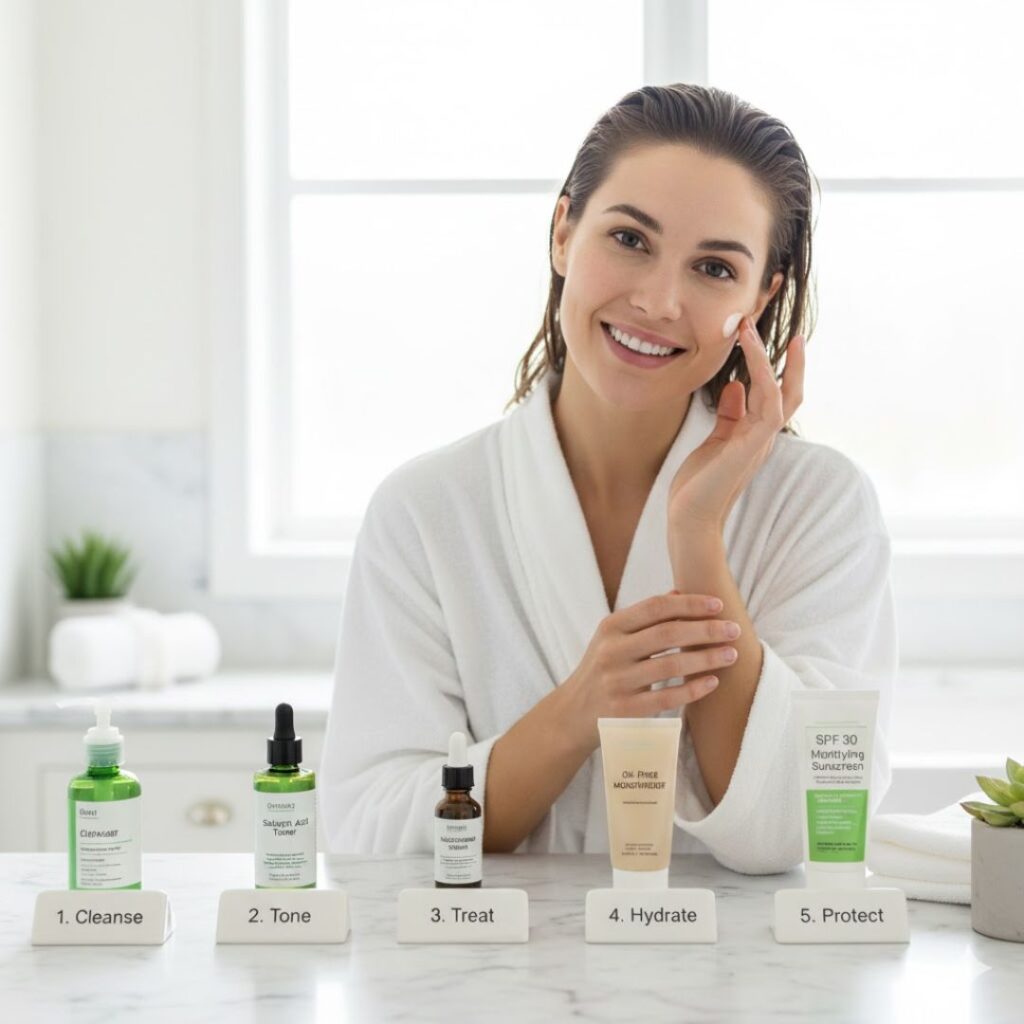
If you have oily skin, mornings can feel tricky — especially when your skin becomes shiny only a few hours after cleansing. But oily skin doesn’t need harsh or stripping products. In fact, the more you strip oil, the more your skin compensates by producing even more. So the goal of a morning routine for oily skin isn’t to dry it out — it’s to balance it.
Start with a gentle gel or foaming cleanser to refresh your skin and remove overnight oil buildup without making your skin feel tight. After cleansing, applying a lightweight toner helps minimize excess oil production and refine pores while still maintaining hydration. Hydration is key — oily skin can still be dehydrated, and dehydration often triggers more oil.
A lightweight serum with niacinamide or salicylic acid works beautifully to control sebum production, smooth texture, and reduce the look of enlarged pores. You don’t need multiple serums in the morning — one targeted formula is enough.
When it comes to moisturizer, choose a gel-based or oil-free option that absorbs quickly and doesn’t leave a sticky finish. Your skin should feel hydrated yet breathable. And the most important step — sunscreen. For oily skin, look for a matte-finish or gel sunscreen that won’t clog pores or make your skin greasy. Sunscreen not only protects your skin from UV damage but also helps prevent dark spots and acne scars from deepening. With consistent care, oily skin becomes more balanced, refined, and naturally glowing — not greasy.
Morning Skincare Routine Steps for Dry Skin

Dry skin needs comfort, nourishment, and long-lasting moisture — especially in the morning when the skin barrier is most vulnerable. The focus isn’t just hydration, but also preventing moisture loss throughout the day.
Begin with a gentle cream-based or hydrating cleanser that refreshes the skin without stripping away the protective oils it naturally needs. After cleansing, a hydrating toner or essence is one of the most valuable steps for dry skin. It works like the foundation of moisture — helping every product you apply afterward soak in deeper and work better.
A serum with hyaluronic acid, ceramides, or peptides works incredibly well for mornings because it replenishes lost water and supports the moisture barrier. If your skin feels tight or flaky, layering hydration (rather than applying one thick product) works better.
Moisturizer is non-negotiable — choose a nourishing cream with ingredients like ceramides, glycerin, squalane, or shea butter. This step seals in hydration and protects the skin from cracking or irritation caused by weather or makeup.
Finally, sunscreen is just as important for dry skin as it is for oily skin. Choose a hydrating sunscreen or one with a creamy texture to provide an extra layer of comfort and moisture. It not only protects the skin from UV rays but also prevents dryness and premature aging. When dry skin is properly moisturized and protected, it appears smoother, softer, and naturally radiant — without flaking or tightness.
Morning Skincare Routine Steps for Combination Skin

Combination skin can be confusing because it behaves differently in different areas. You may have an oily T-zone (forehead, nose, chin) and dryer cheeks — so your routine needs to balance both without over-drying or over-moisturizing.
Start with a gentle foaming or gel cleanser to refresh your skin and control oil production in the T-zone without stripping moisture from drier areas. A hydrating toner helps calm the skin and maintain balance, ensuring no area feels tight or overly oily.
A lightweight serum with niacinamide or hyaluronic acid works wonders for combination skin. Niacinamide helps regulate oil and refine pores, while hyaluronic acid boosts hydration where your skin needs it most. You don’t need multiple serums — one balanced formula often works best.
For moisturizer, choose a lightweight gel-cream or oil-free lotion. The texture should feel hydrating enough for the dry areas but still comfortable and non-greasy for the oily zones. If needed, you can apply slightly more moisturizer on the cheeks and less on the T-zone — skincare doesn’t always need to be applied uniformly.
Finish with sunscreen. A gel or matte sunscreen works especially well for combination skin because it protects without adding unnecessary shine. It helps prevent uneven texture, pigmentation, and long-term sun damage — all of which can be more noticeable on combination skin. With consistent care, combination skin becomes more predictable, balanced, and naturally radiant.
Morning Skincare Routine Steps for Sensitive Skin

Sensitive skin needs extra kindness — it can react to fragrances, harsh formulas, or even changes in weather. So your morning routine should focus on calmness, protection, and barrier support.
Begin with a mild, fragrance-free cleanser designed specifically for sensitive or reactive skin. Your skin shouldn’t feel tight or irritated afterward — just clean and comfortable. Follow with a soothing toner or an essence with calming ingredients like aloe vera, centella asiatica, oat extract, or chamomile. These ingredients help reduce redness and inflammation while hydrating the skin gently.
A serum designed for barrier repair is ideal for sensitive skin. Look for ceramides, hyaluronic acid, or peptides — ingredients that strengthen the skin barrier and improve its natural defense system. Avoid strong actives in the morning unless prescribed or recommended by a dermatologist.
Moisturizer is essential because sensitive skin loses moisture quickly. Choose a gentle, non-comedogenic cream with ceramides, squalane, or glycerin. The formula should feel soothing rather than heavy.
The final step — sunscreen — is crucial but often tricky for sensitive skin. Chemical sunscreens may irritate some people, so a mineral sunscreen with zinc oxide or titanium dioxide may feel more comfortable and calming. It protects your skin from UV rays while reducing redness and sensitivity. When treated gently and consistently, sensitive skin becomes calmer, stronger, and more resilient — with a healthy, natural glow.
Morning Skin Care Routine for Acne-Prone Skin

Acne-prone skin requires a morning routine that is gentle, balancing, and consistent. The goal isn’t to strip the skin of oil or use harsh drying ingredients—instead, it’s to control excess sebum, calm inflammation, prevent clogged pores, and support a healthy skin barrier. When the skin feels balanced and healthy, breakouts naturally reduce over time.
A morning routine helps create a protective shield against pollution, sweat, bacteria, makeup, and sun exposure—factors that can worsen acne throughout the day. With the right steps and ingredients, you can reduce redness, prevent new pimples, and begin healing old scars.
Start With a Gentle Anti-Acne Cleanser

In the morning, a gentle cleanser containing salicylic acid, tea tree oil, niacinamide, or neem helps remove overnight oil buildup without irritating or sensitizing the skin. The key here is not over-washing. Over-cleansing can push your skin to produce even more oil, leading to new breakouts.
A mild gel-based cleanser works best because it cleans deeply but does not clog pores. It also helps keep whiteheads, blackheads, and active breakouts under control.
Use a Lightweight Toner to Balance Your Skin

After cleansing, a soothing toner helps minimize pores, reduce inflammation, and restore the natural pH of your skin. Ingredients like witch hazel, rose water, green tea extract, niacinamide, or aloe vera are perfect for acne-prone skin.
These calm redness, control excess oil, and prepare your skin to absorb serums or treatments more effectively. A toner also helps keep the skin hydrated, which is important because dehydrated skin can trigger even more breakouts.
Apply a Targeted Acne Serum
Serums are especially helpful for acne because they deliver active ingredients deeper into the skin. A morning serum with salicylic acid, niacinamide, centella asiatica (cica), vitamin C (in low concentration), or tea tree extract can help:
Reduce active pimples
Control excess sebum
Fade acne marks over time
Strengthen the skin barrier
Calm inflammation
If you’re using vitamin C, choose a gentle formulation suitable for acne-prone skin and pair it with sunscreen for better results.
Hydrate With a Non-Comedogenic Moisturizer
Contrary to popular belief, acne-prone skin absolutely needs moisturizer. When you skip it, your skin becomes dry and produces more oil to compensate—which leads to breakouts.
A lightweight gel-based moisturizer with hyaluronic acid, ceramides, centella asiatica, or glycerin hydrates the skin without clogging pores. These ingredients ensure the skin barrier stays healthy and protected.
Look for labels like oil-free, non-comedogenic, or non-acnegenic when selecting moisturizers.
Apply SPF ( Sun Protection Factor)—The Most Important Step
Sunscreen is important for acne-prone skin because UV exposure can darken acne scars, slow healing, and trigger inflammation. A lightweight, non-greasy gel or fluid sunscreen with SPF 30 or higher works best.
Mineral sunscreens with zinc oxide or titanium dioxide are ideal because they are gentle and help soothe irritated or sensitive acne-prone skin.
Optional Step: Spot Treatment
If you have active pimples, applying a spot treatment with benzoyl peroxide, tea tree oil, or salicylic acid can help reduce swelling and prevent new breakouts. Use it sparingly and only on active acne—not the whole face.
Benefits of This Routine
Helps reduce active acne and prevents new breakouts
Minimizes inflammation and redness
Balances excess oil production without drying the skin
Strengthens the skin barrier for long-term improvement
Helps fade acne marks and scars gradually
Protects skin from UV damage and pollution
Morning Skin Care Routine With Ayurvedic Home Remedies
Ayurveda believes that beautiful skin is not just the result of external products—it reflects inner balance, healthy digestion, good sleep, and a calm mind. A morning skincare ritual rooted in Ayurveda helps purify the skin, improve circulation, balance doshas (Vata, Pitta, Kapha), and enhance natural radiance.
Unlike chemical-heavy skincare routines, Ayurvedic ingredients are gentle yet powerful. They nourish the skin at a deeper level while promoting long-term glow and health.
Step-by-Step Ayurvedic Morning Routine
The first step in an Ayurvedic skincare routine begins before any product touches your face—by waking your senses and balancing your body.
After waking up, take a moment to drink a glass of warm water or detox water infused with tulsi, lemon, or cinnamon. This helps flush out toxins, improve digestion, and enhance skin clarity from within.
1. Cleansing with Natural Ayurvedic Cleansers
Instead of harsh chemical cleansers, Ayurveda recommends gentle and natural cleansing ingredients suited to your skin type. These herbs remove dirt and excess oil without stripping moisture.
A popular Ayurvedic cleanser is gram flour (besan) mixed with raw milk or rose water. This paste cleanses deeply, brightens the complexion, and removes tan naturally.
If you want something milder, a mixture of multani mitti with rose water works wonderfully for oily to combination skin, while milk and honey are ideal for dry and sensitive skin because they soothe irritation and hydrate the skin barrier.
2. Herbal Steam (Optional, Once or Twice a Week)
Herbal steaming opens clogged pores and improves blood circulation. Adding leaves like neem, tulsi, or mint purifies the skin and reduces acne-causing bacteria.
If your skin is dry or sensitive, keep the steam minimal and lukewarm to avoid irritation.
3. Toning with Pure Ayurvedic Hydrosols
Ayurveda recommends toners that are natural, soothing, and balancing. The best options include:
Rose water – balances pH and hydrates skin
Tulsi water – great for acne-prone or oily skin
Cucumber juice – calms irritated or sensitive skin
Aloe vera water – hydrates and repairs skin barrier
Toners help tighten pores, refresh skin, and prepare it to absorb the next skincare layer.
4. Applying Ayurvedic Serums or Oils
Ayurvedic facial oils are known as Mukh Lepana or Kumkumadi tailam, known for brightening, improving elasticity, and reducing pigmentation.
You can use:
Kumkumadi Oil – improves glow and fades dark spots
Almond Oil – nourishes dry and mature skin
Tea tree oil (diluted) – helps oily or acne-prone skin
Aloe gel – gentle option for all skin types
A few drops are enough—massage gently upward using fingertips or a gua sha tool to boost circulation and lymphatic drainage.
5. Moisturizing With Ayurvedic Ingredients
Hydration is crucial, even if your skin is oily. Choose ingredients based on skin needs:
Dry skin → ghee, shea butter, almond oil or coconut oil
Oily or acne-prone skin → aloe vera gel or neem cream
Normal or combination skin → saffron gel, rose gel, or sandalwood-infused creams
Massaging moisturizer improves absorption and nourishes the skin barrier.
6. Ayurvedic Sunscreen or Natural Sun Protection
Even Ayurveda emphasizes protecting skin from harsh sunlight. While traditional recipes include sandalwood, aloe vera, turmeric, and ghee, modern Ayurvedic sunscreens offer SPF protection with lightweight formulas.
If you prefer a natural alternative, apply a thin layer of aloe gel with a pinch of turmeric or licorice (mulethi)—this helps soothe and brighten while offering mild protection (though it should be paired with a proper SPF for full effectiveness).
Benefits of Ayurvedic Morning Skincare Routine
Helps detoxify the skin naturally
Improves blood circulation and enhances natural glow
Strengthens the skin barrier without chemicals
Reduces acne, inflammation, and pigmentation
Supports long-term youthful skin and slows aging
Aligns mind-body balance for glowing skin from within
Simple Night Skincare Routine Steps for Repair, Recovery, and Glow
Your night routine is where the magic happens. When you sleep, your skin switches into repair mode. Collagen production increases, cellular turnover speeds up, and your skin heals from the stress of the day.
A nighttime routine helps support this natural process so your skin wakes up refreshed and rejuvenated.
1. Makeup Removal or Oil Cleanser
One of the biggest mistakes people make is sleeping with makeup or sunscreen on. These block your pores, cause breakouts, and speed up aging. Using a cleansing balm or oil helps remove sunscreen, makeup, dirt, and bacteria without damaging your skin barrier.
This step ensures your cleanser works effectively — and together, they help your skincare absorb better.
2. Gentle Cleanser
After oil cleansing, wash your face with a gentle cleanser (double cleansing). This helps remove residue and deeply purify pores, especially if you live in a humid or polluted environment.
Double cleansing is not harsh — it’s actually more gentle than scrubbing or using strong products.
3. Toner or Hydrating Essence
At night, your skin loses water more easily. Applying a hydrating toner or essence replenishes moisture and soothes your skin after cleansing.
It also prepares your skin for treatments like serums or retinol.
4. Treatment Serum (Niacinamide / Retinol / AHA / BHA)
This step depends on your skin goals.
Niacinamide helps control oil, tighten pores, and improve texture.
Retinol boosts collagen, reduces wrinkles, and treats acne and pigmentation.
AHAs brighten and smooth the skin by exfoliating gently.
BHAs clear clogged pores and reduce breakouts.
Not all treatments should be used together — slow and consistent use prevents irritation.
5. Moisturizer or Overnight Mask
Night creams are thicker for a reason — they lock in all the ingredients and prevent moisture loss. A good moisturizer supports the natural repair process and helps keep the skin soft and plump.
If your skin feels dry or dull, an overnight hydrating mask once or twice a week can make your skin feel deeply nourished.
6. Eye Cream (Optional)
If you struggle with puffiness, fine lines, or dark circles, an eye cream formulated with peptides or caffeine may help. The skin around the eyes is thin and sensitive, so specialized formulas are gentler.
Benefits of a Night Skincare Routine
Repairs and regenerates skin cells
Reduces dark spots, scars, and fine lines over time
Improves skin elasticity and collagen production
Helps prevent acne and clogged pores
Enhances overnight glow and softness
Supports long-term anti-aging and barrier health
Night Skincare Routine Steps for Normal Skin
Normal skin usually feels balanced, neither too oily nor too dry, and reacts well to most products. Still, nighttime is the best opportunity to nourish and maintain that balance while preventing early signs of aging or skin dullness.
Start with makeup removal or cleansing balm if you’ve worn sunscreen or makeup during the day. Even if your face looks clean, sunscreen and pollution particles can linger inside pores — double cleansing ensures everything is removed. Follow with a gentle cleanser to leave your skin refreshed without stripping its natural oils.
After cleansing, apply a hydrating toner or essence to restore moisture and prepare your skin for active ingredients. At night, using a serum with gentle actives such as peptides, retinol, or hyaluronic acid can be beneficial. Retinol is especially effective for preventing fine lines, uneven texture, and pigmentation — but it should be introduced slowly if you’re new to it.
Seal everything with a lightweight but nourishing moisturizer. Your night cream shouldn’t feel heavy, but it should lock in hydration so your skin wakes up soft and glowing. If you want an extra boost, use a sleep mask 1–2 times a week to enhance overnight repair. With consistent nighttime care, normal skin remains healthy, glowing, and well-protected against aging and environmental damage.
Night Skincare Routine Steps for Dry Skin
Dry skin needs deep nourishment and barrier repair at night because this is when moisture loss naturally increases. The goal is to replenish hydration and strengthen the skin so it feels soft and protected the next morning.
Begin with a balm or creamy cleanser if you’re wearing sunscreen or makeup. Follow with a gentle hydrating cleanser that cleans without stripping. After cleansing, apply a hydrating toner or essence to help draw moisture into the skin and prepare it for layering.
A serum with hyaluronic acid, peptides, ceramides, or squalane works beautifully for dry skin. If you’re targeting fine lines or dullness, retinol can also be included — but pair it with barrier-strengthening ingredients to avoid irritation.
Next, apply a rich, comforting moisturizer. It should feel soothing, protective, and long-lasting — like a soft, nourishing layer over the skin. Some people with dry skin benefit from adding facial oil at the end to lock everything in, especially in winter or low-humidity environments. Once a week, use an overnight hydrating mask for extra nourishment and deeper repair. With consistency, dry skin becomes smoother, plumper, and naturally radiant — without the tight or flaky feeling.
Night Skincare Routine Steps for Combination Skin
Combination skin can feel oily in the T-zone and dry or normal in other areas, which means balance is essential — especially at night when the skin repairs itself.
Start with a cleansing balm or micellar water to remove sunscreen and makeup, followed by a gentle gel cleanser to clear buildup and refresh the skin. After cleansing, apply a hydrating toner or essence to maintain balance and prep the skin.
For treatment, choose a serum that suits your skin needs: niacinamide to balance oil and refine texture, hyaluronic acid to hydrate dry areas, or a low-strength retinol to prevent aging and improve overall tone. You can even adopt zone-specific application if needed — active ingredients on the T-zone and calming formulas on drier areas.
Use a lightweight gel-cream or lotion moisturizer that hydrates without feeling greasy. If your cheeks need extra hydration, apply a little more moisturizer there. Once or twice a week, a clay mask for the T-zone or hydrating mask for dry areas works well.
With proper care, combination skin becomes more balanced, smooth, and evenly textured — without dry patches or midday shine.Combination skin can feel oily in the T-zone and dry or normal in other areas, which means balance is essential — especially at night when the skin repairs itself.
Start with a cleansing balm or micellar water to remove sunscreen and makeup, followed by a gentle gel cleanser to clear buildup and refresh the skin. After cleansing, apply a hydrating toner or essence to maintain balance and prep the skin.
For treatment, choose a serum that suits your skin needs: niacinamide to balance oil and refine texture, hyaluronic acid to hydrate dry areas, or a low-strength retinol to prevent aging and improve overall tone. You can even adopt zone-specific application if needed — active ingredients on the T-zone and calming formulas on drier areas.
Use a lightweight gel-cream or lotion moisturizer that hydrates without feeling greasy. If your cheeks need extra hydration, apply a little more moisturizer there. Once or twice a week, a clay mask for the T-zone or hydrating mask for dry areas works well.
With proper care, combination skin becomes more balanced, smooth, and evenly textured — without dry patches or midday shine.
Night Skincare Routine Steps for Sensitive Skin
Sensitive skin needs gentle, protective care at night — no harsh exfoliants or strong actives unless specifically needed and tolerated. The focus is on calming, hydrating, and supporting the skin barrier.
Begin with a fragrance-free makeup remover or cleansing milk to gently break down sunscreen and makeup. Follow with a mild, non-foaming cleanser that leaves your skin clean but not tight or irritated.
After cleansing, use a calming toner or essence with soothing ingredients like oat extract, centella asiatica, aloe, or panthenol. Instead of multiple actives, stick to one barrier-strengthening serum like ceramides, peptides, or hyaluronic acid. If your skin tolerates it and you’re targeting concerns, slowly introduce low-strength retinol — but only if your skin is ready, and preferably under dermatologist guidance.
A nourishing, fragrance-free moisturizer is essential. Look for formulas with ceramides, squalane, glycerin, and shea butter to soothe and strengthen the barrier. If your skin feels irritated or warm, applying a calming overnight mask helps reduce inflammation and redness.
With consistent, gentle care, sensitive skin becomes calmer, stronger, and more resilient — showing a healthy, soft glow over time.
Night Skincare Routine for Acne-Prone Skin
Acne-prone skin needs extra care at night because this is when the skin naturally enters repair mode. Throughout the day, oil, sweat, pollution, makeup, and bacteria accumulate on the skin—clogging pores and triggering breakouts. A consistent night routine helps clear pores, calm inflammation, control excess oil production, and support faster healing.
The goal isn’t just to treat existing acne but also to prevent new breakouts while strengthening the skin barrier.
1. Start with Gentle Double Cleansing
Double cleansing works wonderfully for acne-prone skin because it removes deep impurities that a single cleanser might leave behind. Start with a mild oil-free cleansing balm or micellar water to remove sunscreen and makeup.
The second step should be a lightweight gel-based or salicylic acid cleanser. This helps remove excess oil, dirt, and bacteria from deep inside pores without stripping moisture. A gentle cleanser ensures your skin remains balanced—not overly dry or irritated.
2. Use an Alcohol-Free Toner to Rebalance Skin
A good toner helps tighten pores, refine texture, and restore the skin’s natural pH. For acne-prone skin, choose toners containing ingredients like aloe vera, green tea extract, niacinamide, or witch hazel (only if skin isn’t too sensitive). These help reduce inflammation and soothe redness while prepping the skin for treatment products.
3. Apply Acne-Targeted Treatment Serum
This is one of the most important steps. Serums with active ingredients penetrate deeply and help treat acne from within. If your skin can tolerate it, ingredients like salicylic acid, niacinamide, retinol (once or twice a week), or tea tree extract help unclog pores and control sebum production.
Applying these products consistently encourages cell turnover, reduces acne-causing bacteria, and improves skin texture over time.
4. Spot Treatment for Active Breakouts
Instead of applying strong acne medication all over the face, use spot treatment only on inflamed pimples. Ingredients like benzoyl peroxide, retinoids, or sulfur help shrink pimples faster and prevent scars.
This step prevents irritation on areas that don’t need medication while giving focused care where it’s needed most.
5. Choose a Lightweight, Oil-Free Moisturizer
Moisturizing might feel unnecessary if your skin already feels oily or acne-prone, but skipping this step can make things worse. When your skin feels dehydrated, it produces even more oil—leading to clogged pores.
A lightweight gel moisturizer or water-based formula works best. Look for label terms like:
Non-comedogenic
Oil-free
Fragrance-free
These ensure the product hydrates without triggering breakouts.
6. Apply a Healing Overnight Gel or Sleeping Mask (Optional)
Once or twice a week, you can apply a calming overnight gel containing calming ingredients like aloe vera, snail mucin, or centella asiatica (cica). These help reduce inflammation, acne scars, and redness.
This step supports deeper overnight repair and hydration without feeling greasy.
7. Maintain Lip and Under-Eye Care
Even if you focus mainly on acne, don’t forget the delicate areas of your face. Applying a gentle under-eye cream and a hydrating lip balm helps maintain a balanced nighttime routine.
Benefits of a Night Routine for Acne-Prone Skin
Helps clear clogged pores and remove trapped impurities
Reduces active breakouts and inflammation
Supports overnight skin healing and recovery
Controls excess oil without drying out skin
Prevents new pimples and reduces acne scars
Strengthens the skin barrier over time
A thoughtful night routine can transform acne-prone skin—not overnight, but steadily and noticeably. Consistency is key. With the right products and patience, you’ll see fewer breakouts, smoother texture, and clearer, healthier skin.
Night skin care routine Ayurvedic home remedies
Ayurveda believes that nighttime is the perfect opportunity for the skin to rest, repair, and rejuvenate. While modern skincare focuses heavily on products and actives, Ayurvedic remedies work with the body’s natural healing cycle (pitta dosha time) to nourish the skin from within. An Ayurvedic night routine is slow, calming, and rooted in natural ingredients that are easily available at home.
This type of skincare is especially helpful for those dealing with dullness, pigmentation, acne, uneven texture, or early aging because Ayurveda focuses not just on topical care, but on stress reduction, blood circulation, and balancing internal energy.
Below is a complete Ayurvedic-inspired nighttime routine you can follow at home.
1. Start With a Gentle Cleanse (Ubtan or Raw Milk Cleanse)
As the day ends, your skin collects sweat, dust, sebum, and pollution. Ayurveda recommends gentle cleansing that preserves the skin’s natural oils instead of stripping them.
You can use raw milk or an ubtan cleanser.
How to make an Ayurvedic cleanser:
2 tsp chickpea flour (besan)
½ tsp turmeric (kasturi turmeric preferred)
1 tsp raw milk or rose water.
Mix into a paste and massage gently onto damp skin. Rinse with lukewarm water.
This cleanser removes dirt, improves complexion, and keeps the skin barrier healthy.
2. Tone With Natural Hydration (Rose Water or Aloe Gel)
This step helps repair skin damage, reduce pigmentation, and promote healthy cell turnover. Ayurveda recommends using herbal oils prepared using traditional infusion methods because oils penetrate deeply during nighttime.
Some of the best oils for glowing skin include:
Kumkumadi Tailam (for pigmentation, glow, anti-aging)
Moringa or Almond Oil (for hydration and fine lines)
Tea Tree or Neem Oil (for acne-prone skin)
Jojoba or Rosehip Oil (balances sebum, improves elasticity)
Warm a few drops between your palms and massage gently for 5–7 minutes. This improves blood circulation and supports lymphatic drainage. Instead of chemical toners, Ayurveda suggests hydrating and soothing remedies.
A pure rose water spray gently balances skin pH and refreshes the skin. Aloe vera gel is also a wonderful option if you have acne or irritation. Both help tighten pores, calm inflammation, and boost moisture absorption. Make sure the rose water you use is steam-distilled and not artificially scented.
3. Start Face Massage or Gua Sha (Abhyanga for the Face)
Ayurveda deeply values facial massage because it stimulates marma points and improves skin vitality.
A slow massage lifts the skin, relaxes face muscles, softens fine lines, and promotes a youthful glow by boosting collagen production.
Start from the center of the face and move outward and upward. Use gentle pressure around the eyes and deeper on the cheeks and forehead. This ritual also works as a stress-relief therapy, helping you sleep better.
4. Apply a Night Mask (Optional but Highly Beneficial)
Once or twice a week, you can use an Ayurvedic pack to soothe inflammation, brighten the skin, or deeply hydrate.
Here are a few natural homemade mask options:
For Dry Skin: Banana paste + honey + milk cream
For Oily Skin: Fuller’s earth (Multani mitti) + rose water
For Pigmentation: Sandalwood powder + turmeric + aloe gel
For Sensitive Skin: Oat powder + cucumber juice + rose water
Apply for 10–15 minutes, rinse gently, and avoid scrubbing.
5. Ayurveda Sleep Ritual (The Secret to a Healthy Glow)
Skincare doesn’t end with products — Ayurveda highlights the importance of proper sleep. During sleep, the body naturally repairs tissues, balances hormones, and reduces stress that contributes to premature aging and breakouts.
Before sleeping:
Drink warm water or herbal tea (chamomile, tulsi, or turmeric).
Avoid screens for 30 minutes.
Practice slow deep breathing to calm the mind.
This helps reduce inflammation and supports a clear, glowing complexion.
Benefits of Ayurvedic Night Remedies
Helps balance skin doshas naturally
Reduces pigmentation and uneven tone
Boosts natural glow and radiance
Promotes collagen production and firmness
Supports skin repair during sleep
Improves texture and softness
Reduces acne and inflammation
Nourishes the skin barrier without chemicals
Calms the mind and reduces stress aging
How Long Will It Take to See Results?
Skincare isn’t a same-day miracle. Results depend on consistency, skin condition, and products.
Here’s what most people experience:
Hydration improvement: 2–7 days
Brighter glow: 2–3 weeks
Pigmentation fading: 6–12 weeks
Wrinkle and texture improvement: 8–24 weeks
Good skincare isn’t fast — it’s worth it.
Final Thoughts
A morning and night routine isn’t about trends or expensive products — it’s about respecting your skin and giving it what it needs at the right time.
Morning = Protect
Night = Repair
When you follow both routines consistently, your skin becomes healthier, brighter, smoother, and naturally glowing — not just temporarily, but long-term.