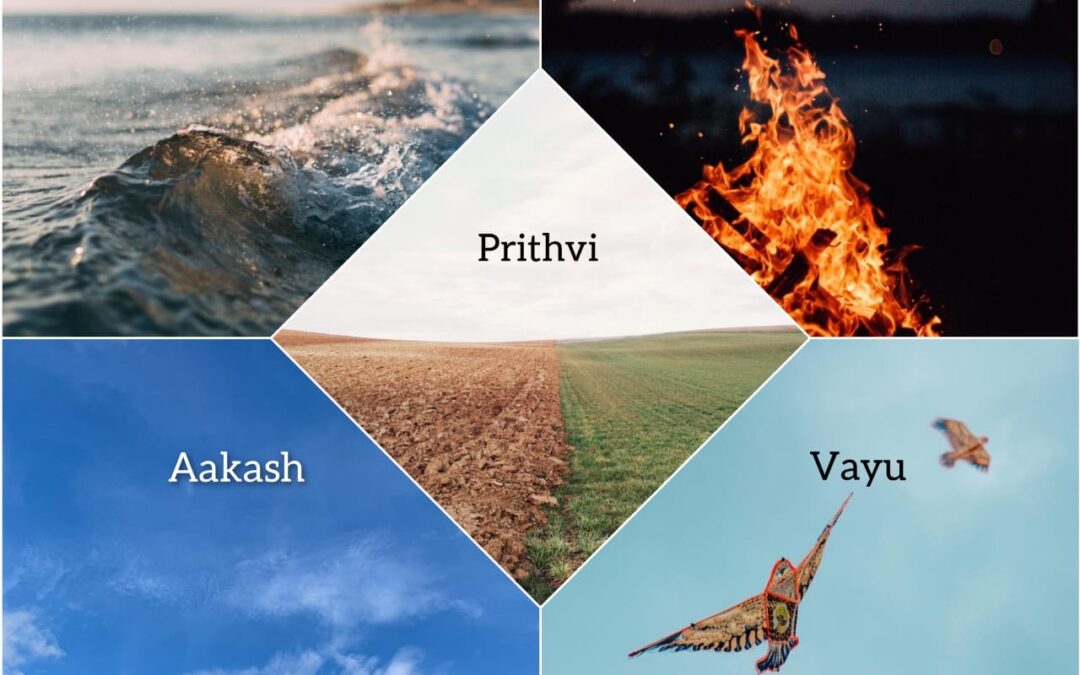
Ayurveda says that everything in nature — including the human body — is built from five fundamental elements known as the PanchaMahabhutas:
Akasha (Space), Vayu (Air), Agni (Fire), Jala/Apas (Water), and Prithvi (Earth).
These aren’t elements in the modern chemical sense. Instead, they represent qualities, functions, and patterns of nature. They describe how your body moves, digests, feels, reacts and heals. Understanding them helps you understand your dosha, your health tendencies, and how to balance yourself using food, routine, and mindful living.
This guide breaks everything down in a simple yet deep way — using classical Ayurvedic principles, lifestyle examples, modern insights, and practical tips you can start today.
Cited references include classical interpretations from Charaka Samhita, standard Ayurvedic literature, and reputable sources such as summaries from Wikipedia (Pancha Bhuta), IRJAY review papers, The Yoga Institute and Ayurvedic practitioner platforms.
What Are the PanchaMahabhutas?
In Sanskrit:
Pancha = five
Maha = great
Bhuta = natural element / that which exists
In Ayurveda and Samkhya philosophy, the five elements explain how the universe evolves, how the body is formed, and how life functions. They give the framework for:
Doshas (Vata, Pitta, Kapha)
Dhatus (tissues)
Malas (waste)
Agni (metabolic fire)
Sense organs and mind functioning
Ayurvedic texts say that the elements manifest sequentially — from subtle to gross: Akasha → Vayu → Agni → Jala → Prithvi. This is also seen in how the embryo forms: first space, then movement, then heat/metabolism, then fluids, then solid tissues.
Five Elements of the Human Body in Ayurveda
1. Akasha (Ether/Space
Akasha is the most subtle of all elements. It’s the space inside everything: the gap between cells, the openness in your joints, the stillness in your mind. Ayurveda says without space, nothing can exist or move.
Qualities
Light
Subtle
Clear
Soft
Expansive
Where You Feel Akasha in the Body
Ear and hearing
Hollow organs (lungs, stomach cavities)
Creative and intuitive mental space
Signs Your Akasha Is Balanced
Clear thinking
Good listening
Creativity and calmness
Sense of openness without overwhelm
Signs of Excess Akasha
Too much isolation
Feeling spaced out
Overthinking / anxiety
Loss of appetite
Emptiness / instability (common with aggravated Vata)
How to Balance Akasha
Diet: Warm, grounding Indian foods — khichdi, ghee, ragi, dal with jeera tadka.
Lifestyle: Structure your day; reduce late-night scrolling; increase grounding tasks.
Yoga: Tadasana, child pose, and forward bends.
Mudra: Akasha Mudra (thumb & middle finger) — great for mental clarity.
2. Vayu (Air)
Vayu governs movement — breath, blood flow, nerve impulses, elimination, and the movement of thoughts. Without Vayu, life is static.
Qualities
Dry
Cold
Light
Mobile
Rough
Where You Feel Vayu
Nervous system
Lungs
Large intestine
Muscles
All voluntary & involuntary movements
Balanced Vayu Feels Like
Good energy
Easy breathing
Flexible body
Creativity
Quick learning
Signs of Vayu Imbalance
Gas, bloating
Anxiety
Restlessness
Insomnia
Joint pains
Dry skin
How to Balance Vayu
Diet: Warm soups, dal rice, sabudana khichdi, ghee, sesame oil, gond laddoo in winter.
Avoid: Cold chaas, raw salads at night, excessive travel, skipping meals.
Yoga: Slow grounding flows — cat-cow, gentle twists, pranayama (alternate nostril breathing).
Daily ritual: Abhyanga with sesame oil works wonders.
3. Agni (Fire)
Agni is the fire of digestion and transformation. Every chemical reaction in your body — from digesting food to processing thoughts — relies on Agni.
Qualities
Hot
Sharp
Light
Penetrating
Where You Feel Agni
Stomach & digestive system
Liver metabolism
Eyesight (Ayurveda says vision is a form of agni)
Mental clarity
Balanced Agni Looks Like
Strong but comfortable digestion
High energy
Balanced appetite
Sharp intellect
Good immunity
Signs of Low Agni
Bloating
Heavy feeling after meals
Slow digestion
Excess sleepiness
Low enthusiasm
Signs of Excess Agni
Acidity
Irritability
Inflammation
Loose motions
Heat rashes
How to Balance Agni
Helpful Herbs: Trikatu for slow digestion; Amla for cooling and rejuvenation.
To strengthen weak Agni:
Ginger + lemon warm water
Light meals like moong dal khichdi
CCF tea (cumin, coriander, fennel)
Short walk after lunch
To calm excessive Agni:
Coconut water
Gulkand milk (cooling)
Avoid spicy foods
Sheetali pranayama
4. Jala / Apas (Water)
Jala is the fluid principle — it hydrates, protects, and cools the body.
Qualities
Cool
Liquid
Soft
Heavy
Flowing
Where You Feel Jala
Blood, lymph, plasma
Saliva and digestive juices
Skin hydration
Emotional gentleness
Balanced Jala Feels Like
Smooth digestion
Hydrated skin
Emotional balance
Calmness
Signs of Excess Jala
Edema/swelling
Laziness
Heavy feeling
Excess mucus
Emotional heaviness
How to Balance Jala
Diet: Reduce excessive dairy, curd, or deep-fried snacks at night.
Add more barley, masala chai, tulsi tea.
Lifestyle: Regular mild exercise, sun exposure in winter.
Yoga: Surya namaskar, warrior flows.
Mudra: Varun mudra for hydration.
5. Prithvi
Earth element is the most grounding — it gives structure, strength, growth, and stability.
Qualities
Heavy
Dense
Solid
Steady
Cool
Where You Feel Prithvi
Bones
Muscles
Skin
Nails & hair
Immunity
Emotional stability
Signs of Balanced Prithvi
Strong immunity
Good stamina
Steady mind
Reliability
Well-formed muscles
Signs of Excess Prithvi
Lethargy
Weight gain
Sluggish digestion
Attachment / resistance to change
How to Balance Prithvi
Diet: Lighter meals, more spices (jeera, ajwain, ginger, pepper).
Reduce heavy wheat-based meals at night.
Activity: Brisk walking, dancing, strength yoga.
Spices & herbs: Triphala, Trikatu, warm herbal teas.
How the Five Elements of the Body Create the Three Doshas In Ayurveda
Doshas are expressions of the five elements within you:
| Dosha | Elements | Key Qualities | Key Functions |
|---|---|---|---|
| Vata | Akasha + Vayu | Light, cold, mobile | Movement, breathing, nervous system |
| Pitta | Agni + Jala | Hot, sharp | Digestion, metabolism, vision |
| Kapha | Jala + Prithvi | Heavy, cool, stable | Structure, immunity, lubrication |
Ayurveda says your unique balance of these determines your prakriti (constitution)
Also You Want to need to more about of Three Doshas In Ayurveda Visit: tridosha
Bhuta Shuddhi & Yogic Methods to Balance Elements
Bhuta Shuddhi means purification of the five elements. Traditional yoga includes:
Breathwork (pranayama)
Sound (mantras)
Rituals
Postures
Awareness practices
Some accessible, safe practices:
1. For Akasha
Meditation
Tratak (candle gazing)
Silent sitting
2. For Vayu
Nadi Shodhana
Slow asana flow
Gentle walks
3. For Agni
Surya namaskar
Kapalabhati (with guidance)
Warm foods
4. For Jala
Moon gazing
Cooling pranayama
Gentle stretching
5. For Prithvi
Grounding poses (Malasana, Vajrasana)
Barefoot walking on grass
Holding stable postures longer
These traditional descriptions appear widely in yoga literature.
Food & Herbs to Balance Each Element
Akasha
Warm, oily foods
Ghee, khichdi, dates, urad dal
Avoid fasting or skipping meals
Vayu
Sesame oil, methi, moong dal, rice
Avoid cold foods, dry snacks, over-caffeination
Agni
Ginger, jeera, hing, trikatu
Light meals
Avoid very cold foods, leftover food, overeating
Jala
Reduce excess sugar/dairy
Add warm soups, barley, tulsi tea
Prithvi
Light grains, veggies, spices
Triphala at night
× Avoid heavy, oily dinners
Modern Research Perspective
A 2022 review paper explains that Panchamahabhuta theory forms the foundation of Ayurvedic physiology, but scientific validation is still evolving.
Modern evidence shows:
Doshas correlate with metabolic patterns
Gut function (Agni) influences immunity
Stress affects Vata-like symptoms
Hydration influences Kapha/Jala balance
But:
Panchamahabhuta is not directly measurable with modern lab tests. It remains a conceptual, clinical framework — useful when applied by trained practitioners.
The combination of classical wisdom + emerging science = balanced understanding.
Common Myths & Misconceptions
Myth 1: PanchaMahabhutas are literal physical elements.
Truth: They are qualities and principles, not chemicals.
Myth 2: One element causes one disease.
Truth: Ayurveda looks at patterns, doshas, agni, lifestyle, season, not one element alone.
Myth 3: You can “fix” elements in one day.
Truth: Element balance comes with consistent habits, seasonal changes, diet, and routine.
How to Check Your Elemental Balance
Vata/Akasha-Vayu high: Anxiety, dryness, gas, insomnia
Pitta/Agni high: Acidity, anger, body heat
Kapha/Prithvi-Jala high: Lethargy, mucus, weight gain
When to consult a practitioner
If symptoms persist, or if you have chronic digestive issues, skin problems, hormonal issues — get personalized guidance.
(Ayurvedic physician assessment includes pulse, tongue, eyes, skin, stools, habits, and emotional tendencies.)
Final Words
Understanding the PanchaMahabhutas gives you a practical, intuitive way to understand your body.
You don’t need to memorize everything — just observe which qualities are increasing in your lifestyle: heat, cold, dryness, heaviness, lightness, movement or stillness.
Balance comes from small daily choices in food, sleep, movement, and mental space.
This guide combined classical concepts from Ayurvedic texts and modern summaries (Wikipedia Pancha Bhuta, Charaka Samhita interpretations, IRJAY review, Yoga Institute practices) to give you a clear, India-specific, practical way to apply the five-element theory today.
FAQs
1. Are Ayurvedic five elements the same as Chinese five elements?
No — concepts differ in origin, meaning and application.
2. Can balancing elements cure diseases?
It supports healing but does not replace medical care. Consult a practitioner for chronic conditions.
3. How long to notice changes?
Usually 1–4 weeks depending on lifestyle consistency.
4. Which element relates most to digestion?
Agni (Fire).
5. Can modern tests check element balance?
No, but clinical patterns reflect elemental tendencies.
6. Are element imbalances seasonal?
Yes — Vata rises in winter, Pitta in summer, Kapha in spring.